
Written and reviewed by Dr. Ajit Kumar, MD (Medicine) | MA (Psychology), Founder of Medimadad. Last reviewed: July 2026. This article is for informational purposes only and does not constitute medical advice. Read our Editorial Policy.
Key Takeaways
- Whey protein builds muscle marginally faster than plant protein due to higher leucine content and faster absorption — but the difference disappears when plant protein is dosed correctly.
- Pea protein combined with rice protein matches whey for muscle hypertrophy in head-to-head trials — the amino acid profiles complement each other to fill the gaps each has alone.
- For Indian vegetarians and the 60–70% of Indians with some degree of lactose intolerance, plant protein is often the more practical and digestively comfortable choice.
- Whey protein concentrate costs 20–40% less per gram of protein in India; whey isolate is priced similarly to premium plant blends.
- The best protein supplement is the one you actually use consistently — digestive comfort and taste tolerance matter more than marginal differences in amino acid scores.
Walk into any gym supplement shop in India and you will face this question immediately: whey or plant protein? The staff will usually have a strong opinion. The internet has even stronger ones. But the clinical evidence tells a more nuanced story — and one that is particularly relevant for the Indian context, where dairy digestion, vegetarian diets, and supplement affordability all shape the right answer.
This article compares whey and plant protein directly on the factors that actually matter: muscle-building effectiveness, digestibility, cost, and suitability for the most common Indian dietary patterns. The goal is a clear, evidence-based recommendation — not a generic answer that applies to everyone equally.
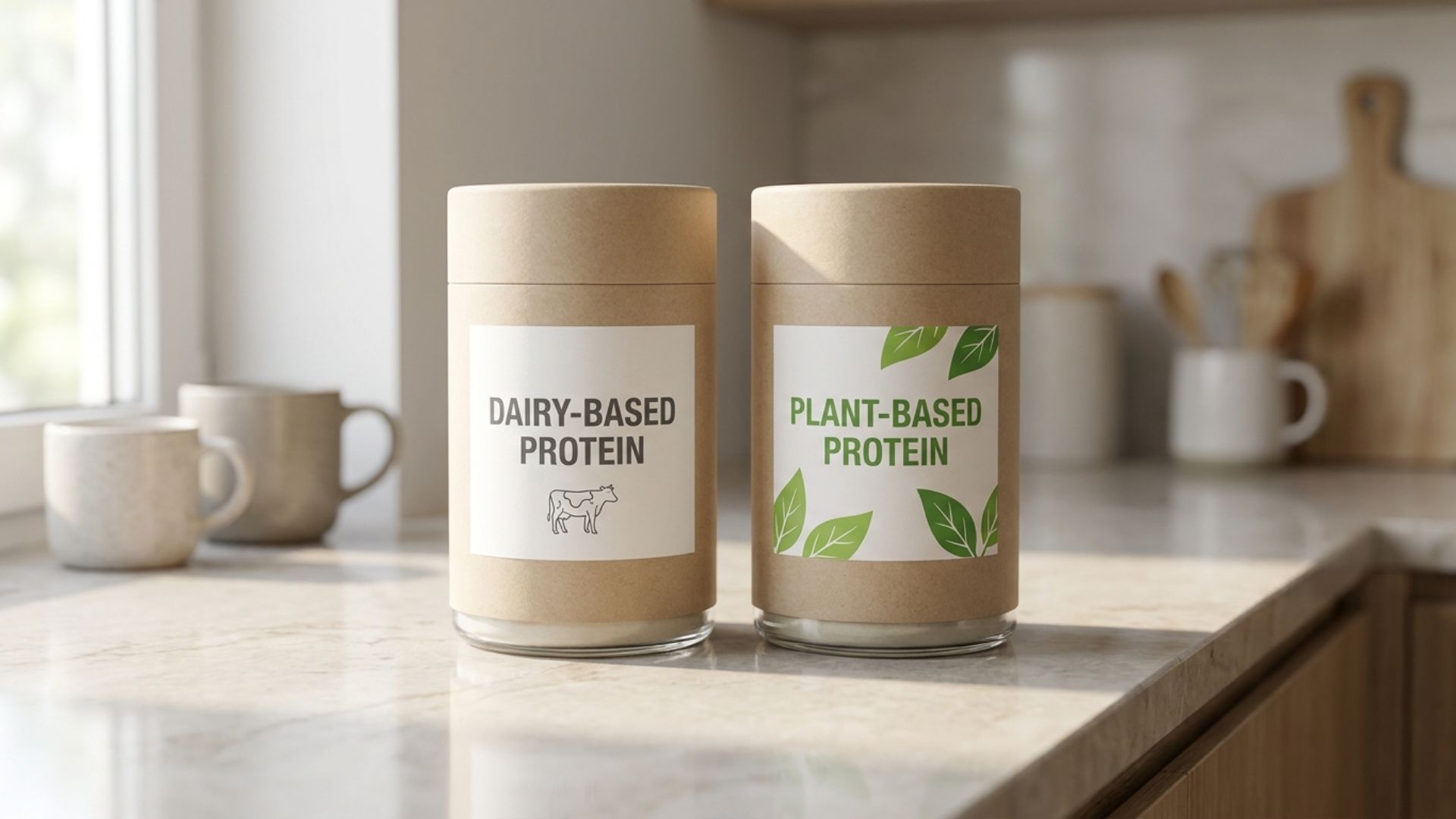
Quick Comparison: Whey vs Plant Protein
| Factor | Whey Protein | Plant Protein |
|---|---|---|
| Best for | Fast muscle recovery, omnivores, budget buyers | Vegetarians, lactose-intolerant, gut-sensitive |
| Protein quality (DIAAS) | 1.09 — excellent (complete amino profile) | Pea: 0.82 | Soy: 0.97 | Pea+Rice blend: ~0.90 |
| Leucine content | ~10–11% of protein — highest of any source | Pea: ~8% | Rice: ~8% | Soy: ~8% |
| Absorption speed | Fast (peaks at 60–90 min post-ingestion) | Slower (more sustained release) |
| Lactose | Concentrate: 4–8% | Isolate: <1% | Lactose-free (all sources) |
| Cost in India | ₹40–60/serving (concentrate), ₹80–120 (isolate) | ₹60–100/serving (pea+rice blend) |
| Verdict | Marginal edge for muscle speed | Better fit for most Indian dietary needs |
What Is Whey Protein?
Whey is the liquid byproduct of cheese or paneer production — the watery portion that separates when milk curdles. It is filtered, dried, and concentrated into powder. Whey comes in three forms: concentrate (70–80% protein by weight, contains some lactose and fat), isolate (90–95% protein, nearly lactose-free, faster absorbing), and hydrolysate (pre-digested for fastest absorption, most expensive).
Whey has the highest leucine content of any protein source — approximately 10–11% of total protein. Leucine is the amino acid that most powerfully activates the mTOR pathway, the cellular switch that turns on muscle protein synthesis. This is the primary reason whey has long been considered the gold standard for post-workout nutrition.
What Is Plant Protein?
Plant protein powders are made from a variety of sources: pea protein (from yellow split peas), rice protein (brown rice), soy protein, hemp, and blended products that combine two or more sources. Each has a different amino acid profile and digestibility score.
The key limitation of most single-source plant proteins is that they are incomplete — they are low in one or more essential amino acids. Pea protein is low in methionine. Rice protein is low in lysine. This is why pea+rice blends have become the dominant plant protein format: the two sources are complementary, each covering the other’s gaps, producing a combined amino acid profile that approaches whey’s completeness.
Soy protein is the exception — it is a complete protein with a DIAAS of 0.97, nearly matching whey. However, concerns about phytoestrogens at high doses and widespread soy allergies have made pea+rice blends more popular for daily use.
Effectiveness: Which Builds More Muscle?
The evidence is less clear-cut than the supplement industry implies. A 2019 randomised controlled trial published in Sports Medicine compared pea protein against whey protein in 161 men over 12 weeks of resistance training. Result: no significant difference in muscle thickness, strength gains, or body composition between groups.
A 2020 meta-analysis in the Journal of the International Society of Sports Nutrition reviewing 18 trials found that total daily protein intake was a stronger predictor of muscle gain than protein source — meaning if you hit your protein target (1.6–2.2g per kg of body weight), the source matters less than marketers suggest.
The nuance: whey’s advantage is most pronounced in the 2–3 hours immediately post-workout, when its rapid leucine spike more aggressively stimulates muscle protein synthesis. For people doing fasted morning training, or who need maximum protein efficiency per gram, whey has a modest real-world edge. For everyone else eating adequate protein across the day, the difference is minimal.
Digestibility and Gut Comfort
This is where plant protein often wins for Indian consumers specifically. Estimates suggest 60–70% of the Indian population has some degree of lactose intolerance — the result of lower lactase enzyme persistence in South Asian genetics. Whey concentrate, which contains 4–8% lactose, can cause bloating, gas, and loose stools in lactose-intolerant individuals.
Whey isolate (under 1% lactose) largely resolves this issue but costs significantly more. Plant proteins — pea, rice, soy — are inherently lactose-free and tend to be better tolerated by people with dairy sensitivity. If you have experienced digestive discomfort after whey concentrate, switching to isolate or plant protein is a straightforward fix.
Cost and Availability in India
Whey concentrate remains the most affordable protein supplement in India — typically ₹40–60 per 25g serving for reputable Indian brands. Whey isolate sits at ₹80–120 per serving. Pea+rice blend plant proteins from quality brands typically cost ₹60–100 per serving — more than concentrate, comparable to isolate.
Important caveat: India’s supplement industry has documented quality control issues. A 2020 investigation by the Rajya Sabha found protein spiking (adding amino acids like creatine or taurine to inflate apparent protein content) was common among budget brands. Buy from brands with third-party testing certification — Informed Sport, NSF, or Labdoor — regardless of whether you choose whey or plant.
Who Should Choose Whey?
Choose whey protein if: you are an omnivore without lactose sensitivity; your primary goal is maximum muscle gain speed; you are on a tight budget and prioritising protein per rupee; you do intense training sessions and want the fastest post-workout muscle protein synthesis stimulus.
If choosing whey: pick isolate over concentrate if you have any history of dairy digestive issues. Concentrate is fine if you tolerate dairy well.
Who Should Choose Plant Protein?
Choose plant protein if: you follow a vegetarian or vegan diet; you experience bloating or GI discomfort with whey concentrate; you prefer to avoid animal products; you have a soy or dairy allergy.
If choosing plant: pick a pea+rice blend rather than a single-source product for the most complete amino acid profile. If using soy, 25–30g daily is well within a safe range — concerns about phytoestrogens at normal supplement doses are not supported by current evidence in healthy men.
Recommended on Amazon.in
Plant Protein Blend (Pea + Rice) — Lactose-free, complete amino acid profile, well-reviewed by Indian buyers
This is an affiliate link – we may earn a commission at no extra cost to you. See our Affiliate Disclosure.
“Among Indian patients asking about protein supplements, most are vegetarian and mildly lactose intolerant — though they often don’t realise it until they start taking whey concentrate daily. For the vast majority of Indian patients, a quality pea+rice blend is the first recommendation. It is complete enough, lactose-free, and removes the digestive variable entirely. Whey isolate is an excellent alternative for those who prefer dairy-based protein and are willing to pay the premium for the isolate form. Either way: hit your daily protein target first. The source is secondary.”
Dr. Ajit Kumar — MD (Medicine) | MA (Psychology) | Founder, Medimadad
Frequently Asked Questions
Is plant protein as effective as whey for building muscle?
Yes, when dosed correctly. A 2019 RCT in 161 men found no significant difference in muscle gain between pea protein and whey over 12 weeks of resistance training. The key condition: total protein intake must meet the recommended 1.6–2.2g per kg of body weight. At adequate doses, protein source matters far less than protein quantity.
Which protein is better for Indians?
For most Indians, plant protein (particularly pea+rice blend or soy) is the more practical choice. The reasons are specific to the Indian context: 60–70% of Indians have some degree of lactose intolerance that makes whey concentrate uncomfortable; most Indians follow vegetarian or predominantly vegetarian diets; and soy protein is domestically abundant and affordable. Whey isolate is an excellent option for non-vegetarians who want the fastest muscle protein synthesis response and tolerate dairy well.
Can I mix whey and plant protein?
Yes — there are no interactions or downsides to mixing sources. Some athletes use whey post-workout (for rapid leucine delivery) and a plant protein shake at other times of day. This is a perfectly valid approach and lets you capture the advantages of both sources.
Does plant protein cause bloating?
Some people experience mild bloating from pea protein, particularly at doses above 30g in a single serving. This is usually due to the fibre content in less-processed pea protein products. Pea protein isolate (higher purity) is better tolerated than concentrate. Start with 20–25g servings and increase gradually. Plant proteins do not contain lactose, so they are free of the dairy-specific bloating that affects whey concentrate users.
Is soy protein safe for men?
Yes, at normal supplement doses. The concern about soy phytoestrogens (isoflavones) affecting male hormone levels is not supported by current evidence at the doses used in typical supplementation (25–50g of soy protein daily). Multiple studies, including a 2021 meta-analysis, found no significant effect on testosterone or oestrogen levels in men consuming soy protein at these amounts. Very high doses over prolonged periods have not been studied adequately, which is why moderation is still sensible.
Related on Medimadad
References
- Banaszek A, et al. The effects of whey vs. pea protein on physical adaptations following 8-weeks of high-intensity functional training. Sports (Basel). 2019;7(1):12.
- Morton RW, et al. A systematic review, meta-analysis and meta-regression of the effect of protein supplementation on resistance training-induced gains in muscle mass and strength in healthy adults. Br J Sports Med. 2018;52(6):376–384.
- Gorissen SHM, et al. Protein content and amino acid composition of commercially available plant-based protein isolates. Amino Acids. 2018;50(12):1685–1695.
- Messina M, et al. Neither soyfoods nor isoflavones warrant classification as endocrine disruptors: a technical review of the observational and clinical data. Crit Rev Food Sci Nutr. 2022;62(21):5824–5885.
- Stokes T, et al. Recent perspectives regarding the role of dietary protein for the promotion of muscle hypertrophy with resistance exercise training. Nutrients. 2018;10(2):180.
Get free weekly health insights
Join thousands of readers. No spam. Unsubscribe anytime.
