
By Dr. Ajit Kumar, MD (Medicine) — Founder, Medimadad. About the Author | Editorial Policy
“Fibermaxxing” has become one of 2026’s bigger nutrition trends — EatingWell reported a 9,500% jump in page views on fiber-related content, and it’s picked up coverage from NPR to Johns Hopkins. I’d normally be skeptical of anything with a TikTok-coined name, but the underlying physiology here is genuinely solid, and it connects to the GLP-1 conversation in a way worth explaining properly rather than dismissing as a trend.
What it actually is
Fibermaxxing just means deliberately increasing daily fiber intake well beyond what most people currently eat — no restrictive diet, no calorie counting, no expensive plan. Most adults eat only 10-15 grams of fiber a day; the actual recommended intake is 38g/day for men under 50, 25g for women under 50, 30g and 21g respectively over 50. Fibermaxxing means closing that gap gradually, over weeks, not all at once.
Use our Daily Fiber Intake Calculator to get your exact recommended target based on your age and sex.
Why it connects to GLP-1 specifically
When gut bacteria ferment fiber, they produce short-chain fatty acids — particularly butyrate and propionate — which directly stimulate specialized L-cells in the gut lining to release GLP-1, the same hormone targeted by Ozempic, Wegovy, and Mounjaro. In practical terms: a genuinely high-fiber diet gives you a continuous, low-level version of the same signal these drugs deliver pharmacologically, at essentially zero cost and no side effects. I want to be precise about scale here — this is a real mechanism, not a marketing claim, but it’s nowhere near the magnitude of a prescription GLP-1 agonist. It’s a genuinely useful lever, not a substitute.
Beyond the GLP-1 connection, fiber does several other things worth knowing: soluble fiber forms a gel that slows digestion and extends fullness; it slows glucose absorption, blunting the spikes and crashes that drive cravings; it feeds beneficial gut bacteria as a prebiotic; and it binds bile acids and cholesterol in the gut, helping lower cardiovascular risk.
Good sources, without needing supplements
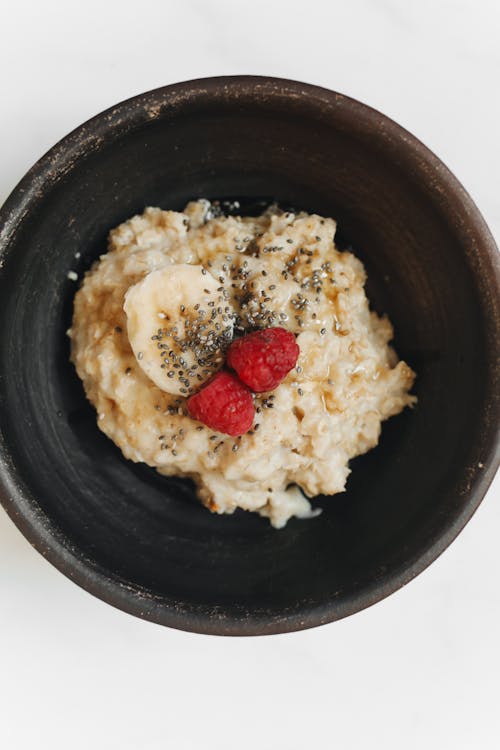
Lentils (dal) lead the list at 15.6g fiber per cooked cup — inexpensive, filling, and already a staple in most Indian diets. Split peas (chana dal) come in even higher at 16.3g per cup. Black beans provide 15g per cup and are particularly good for gut bacteria diversity. Oats offer 4g per half cup raw, plus beta-glucan, a soluble fiber with solid cholesterol-lowering evidence. A whole avocado provides about 10g, combined with healthy fats for sustained fullness. Chia seeds deliver 10g per 30g serving and form a gel in water, useful for satiety. Raspberries lead the berries at 8g per cup — an easy addition to breakfast or a smoothie.
What the research actually shows on weight
Long-term population studies associate every additional 10 grams of daily fiber with roughly a 3.7% lower risk of gaining weight over time — this is slow, cumulative benefit, not a dramatic transformation. The mechanism is straightforward: more fiber drives more natural GLP-1 release, which means less appetite and smaller portions without relying on willpower as the only lever.
How to actually do this without discomfort
The single most common mistake is going from 15g to 40g overnight — this reliably causes bloating, gas, and cramping in people whose gut isn’t adapted yet. Increase by 3-5 grams per week, not per day. Drink at least 8-10 glasses of water daily, since fiber needs water to move through the gut properly. Add one new high-fiber food per week rather than overhauling your whole diet at once. Most people find the initial adjustment period resolves within 4-6 weeks, after which the appetite control becomes clearly noticeable.
Recommended: Psyllium Husk Fiber Supplement
On days when meals are lighter or less varied, a psyllium husk supplement makes it considerably easier to hit your daily target — 7 grams of pure soluble fiber per tablespoon, the same form used in clinical trials for cholesterol and blood sugar management.
Check price and availability on Amazon India: Psyllium Husk Supplement on Amazon
This is an affiliate link – we may earn a commission at no extra cost to you. See our Affiliate Disclosure.
Dr. Ajit Kumar’s clinical perspective
“I like recommending fiber increases to patients precisely because it’s one of the few interventions that’s free, has almost no downside when done gradually, and works through a mechanism that genuinely overlaps with what GLP-1 drugs do. What I push back on is framing it as ‘natural Ozempic’ — the scale of effect isn’t remotely comparable, and I don’t want a patient who needs medication to delay it because they’re fibermaxxing instead. But as a foundation everyone should have regardless of what else they’re doing, this is about as close to a free lunch as nutrition advice gets.”
— Dr. Ajit Kumar, MD Medicine | Healthcare Consultant and Health Educator, Founder of Medimadad
The bottom line
Fibermaxxing isn’t a fad so much as a correction — most people simply eat far less fiber than their body actually needs, and closing that gap has real, if modest and gradual, benefits for gut health, blood sugar, natural GLP-1 activation, and cardiovascular risk. Start with one high-fiber food this week, add another next week, and give your gut a month to adjust before expecting to notice the difference.
Medical Disclaimer: This article is written for educational and informational purposes only and does not constitute medical advice. Always consult a qualified healthcare professional before making changes to your diet or supplement regimen.
Further Reading
Get free weekly health insights from Dr. Ajit Kumar
Join thousands of readers. No spam. Unsubscribe anytime.
