

Medically Written & Reviewed by Dr. Ajit Kumar, MD (Medicine) | MA (Psychology), Founder of Medimadad. Last reviewed: September 2026. This article is for informational purposes only and does not constitute medical advice. Read our Editorial Policy.
Key Takeaways
- A 2025 Boston University study asked 18 expert clinicians to interpret the same 20 CGM reports from people without diabetes. They couldn’t agree on what counts as a problem.
- About 20% of people with completely normal glucose control spend more than 2% of their day above 180 mg/dL, the same “spike” threshold many wellness apps flag as alarming.
- There is currently no established medical guideline for interpreting a continuous glucose monitor in someone who doesn’t have diabetes.
- A Freestyle Libre sensor costs roughly ₹4,200-5,000 in India and lasts 14 days, meaning ongoing use runs over ₹1,00,000 a year.
- CGMs are genuinely valuable for a specific group of people. Healthy people watching a normal glucose curve and assuming it means something is usually not that group.
The Video That’s Everywhere Right Now
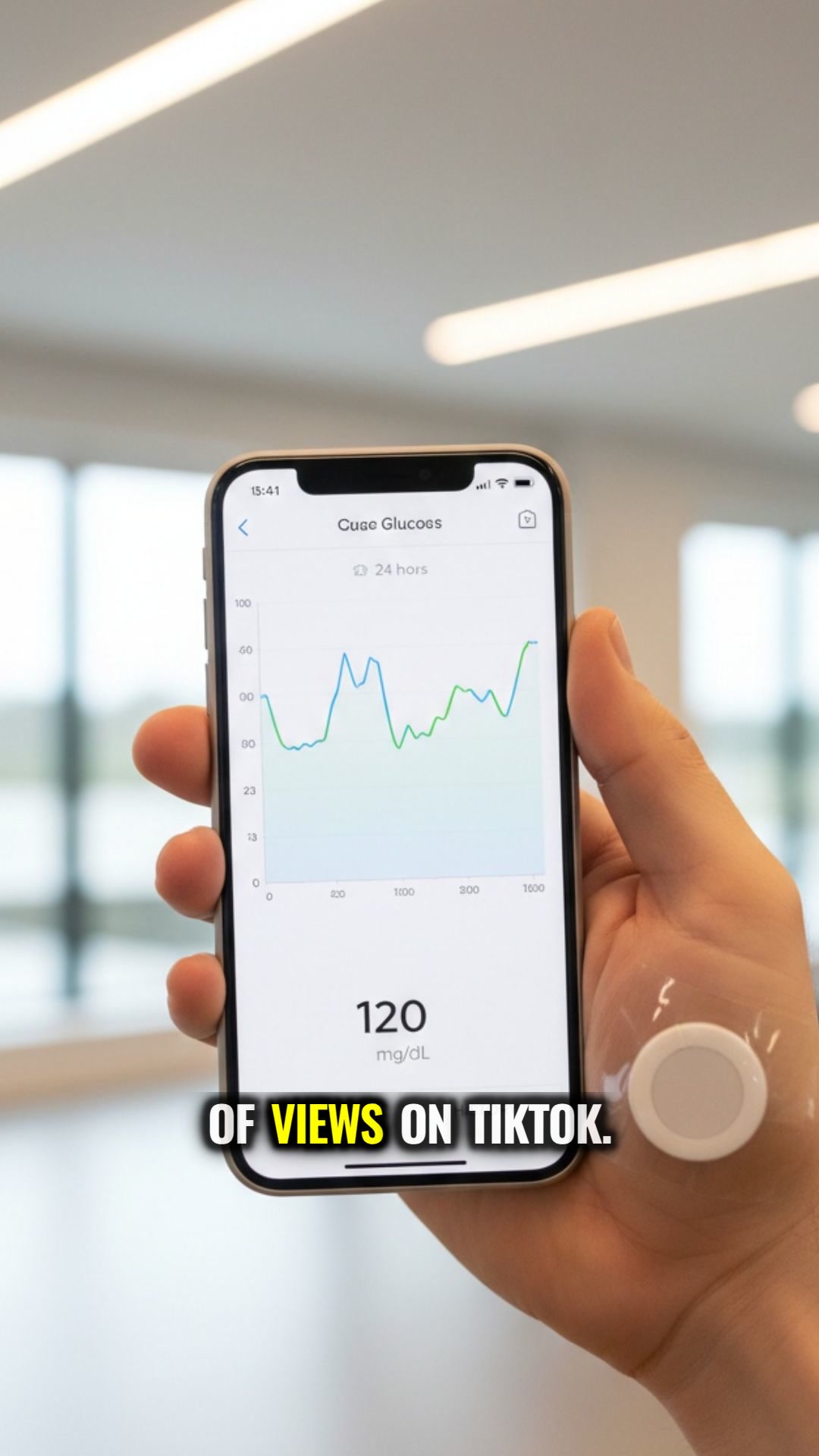
You’ve probably seen the format even if you don’t know the name for it. Someone straps a small sensor to the back of their arm, eats a bowl of rice or a mango or a plate of dal, and then shows you the graph. The line goes up. Sometimes there’s a caption: “This is what’s aging you.” One creator built an entire channel around this and has racked up millions of views doing it.
Continuous glucose monitors were built for people with diabetes, to help them and their doctors manage insulin and avoid dangerous highs and lows. Somewhere in the last three years, they became a wellness accessory. The pitch is simple: your blood sugar tells the truth about your metabolism, and a spike means something is going wrong inside you.
The actual research on this is a lot less tidy than the videos suggest.
What the Doctors Themselves Can’t Agree On
In 2025, a Boston University-led team published a study in the Journal of Diabetes Science and Technology that did something simple and revealing. They gave 18 clinicians with real CGM expertise the exact same 20 glucose reports from people without diabetes, and asked each of them to decide who needed a follow-up.
They didn’t agree. The statistical measure of agreement (a Fleiss’ Kappa of 0.36) is what researchers call “fair” agreement at best, close to what you’d expect from partial guessing. Even on the one threshold most experts leaned toward using, roughly 2% of the day spent above 180 mg/dL, the recommendation for follow-up varied from just over half the panel to nearly all of it, never full consensus.
Here’s the detail that matters most for anyone watching a “shocking” glucose graph on their phone: about 20% of middle-aged adults with completely normal glucose control cross that same 180 mg/dL threshold for more than 2% of their day. A spike on a graph, on its own, doesn’t separate a healthy person from someone with a real metabolic problem. The study’s own conclusion was blunt: there is currently no established guideline for how to interpret CGM data in people who don’t have diabetes.
So When Is a CGM Actually Useful?
Clinically, continuous glucose monitors have a real, well-proven job: helping people with diagnosed diabetes, especially those on insulin, see patterns a fingerstick test a few times a day would miss entirely, and adjust treatment with their doctor accordingly. For people with prediabetes, a CGM can sometimes catch a pattern that a single HbA1c blood test misses, which is a genuine use case, not a marketing claim.
What the evidence doesn’t yet support is a healthy person with no diagnosis wearing one indefinitely and treating every upward line as a verdict on their diet. The device is measuring something real. What it means, in a body that isn’t diabetic, is exactly the question this year’s research says nobody has a solid answer to yet.
The Cost, If You’re Considering It Anyway
A single Freestyle Libre sensor currently runs about ₹4,200 to ₹5,000 in India and lasts 14 days. Worn continuously, that’s roughly ₹8,400 to ₹10,000 a month, more than ₹1,00,000 a year, for data that even specialists disagree on how to read if you’re not managing a diagnosed condition.
“CGM graphs showing a spike after a meal that looks completely normal on clinical review are a common source of unnecessary worry. The appeal is understandable — watching a number in real time feels like control. But a single glucose curve, without context, without knowing your baseline, your sleep, your stress that day, tells you far less than people assume. If you have diabetes or prediabetes, a CGM under your doctor’s guidance can be genuinely useful. If you’re healthy and just curious, that money is better spent on a proper annual checkup with an HbA1c and fasting glucose test. That still tells you more than a month of graphs most people don’t have the training to interpret.”
— Dr. Ajit Kumar, MD (Medicine) | MA (Psychology) | Founder, Medimadad
What to Do Instead
- If you have diabetes or prediabetes, a CGM can be a real, valuable tool, used with your doctor’s guidance, not as a solo wellness experiment.
- If you’re healthy and curious about your metabolic health, a standard fasting glucose and HbA1c blood test gives your doctor a properly validated picture, at a fraction of the cost.
- If you already have a CGM and see a “spike,” don’t panic. Per the research above, a temporary rise after a carbohydrate-heavy meal is common even in people with completely normal glucose control.
- The basics that actually move long-term metabolic health are the same ones this project has covered with real evidence before: what you eat matters more than watching a single graph — see our Glycemic Index Guide for Indian Foods and the daily habits in our guide to reversing prediabetes.
Frequently Asked Questions
Is it bad for my blood sugar to spike after eating?
A temporary rise after a meal, especially a carbohydrate-heavy one, is a normal physiological response, even in people with completely healthy glucose control. What matters clinically is how high the spike goes, how long it stays elevated, and your overall pattern over weeks and months, not any single reading.
Should a healthy person wear a continuous glucose monitor?
There’s currently no established medical guideline recommending this. The 2025 Boston University study found that even expert clinicians disagree on how to interpret CGM data in people without diabetes. If you’re healthy, a standard annual blood test (fasting glucose and HbA1c) is the better-validated way to check your metabolic health.
Who should actually use a CGM?
People with diagnosed diabetes, particularly those on insulin, get the clearest, best-established benefit. People with prediabetes may also benefit under a doctor’s guidance, since a CGM can sometimes catch a pattern a single blood test misses.
How much does a CGM cost in India?
A Freestyle Libre sensor costs roughly ₹4,200 to ₹5,000 and lasts 14 days. Continuous use works out to roughly ₹8,400 to ₹10,000 a month.
References
- Spartano NL, et al. Expert Clinical Interpretation of Continuous Glucose Monitor Reports From Individuals Without Diabetes. Journal of Diabetes Science and Technology. 2025.
Related on Medimadad→ Low Glycemic Index Foods in India: Complete GI Guide | Reversing Pre-Diabetes With Small Daily Habits | 10 Warning Signs of Insulin Resistance You Should Not Ignore | 5 Diabetes Myths Doctors Wish You’d Stop Believing
Get free weekly health insights from Dr. Ajit Kumar
Join thousands of readers. No spam. Unsubscribe anytime.
