
Fatty liver almost never announces itself. No pain, no yellow eyes, no warning. It usually turns up by accident: an ultrasound ordered for something else, or a routine blood test that comes back slightly off. The US National Institute of Diabetes and Digestive and Kidney Diseases calls it “a silent disease with few or no symptoms,” and when symptoms do appear they tend to be vague, like tiredness or a dull ache in the upper right abdomen.
That silence is the problem in India, because the numbers are no longer small. Here is what the best recent studies found, where they are weaker than the headlines suggest, and what the evidence says actually reduces liver fat.
First, the name changed
You may have heard “NAFLD,” non-alcoholic fatty liver disease. Hepatology societies now prefer MASLD, short for metabolic dysfunction-associated steatotic liver disease. The 2024 EASL-EASD-EASO clinical practice guideline defines it as fat in the liver, plus at least one cardiometabolic risk factor, in someone who is not drinking harmful amounts of alcohol. The risk factors are the familiar ones: excess weight or a large waistline, raised blood sugar, high blood pressure, high triglycerides, low HDL cholesterol.
The new name matters because it points at the cause. This is primarily a metabolic condition, not a drinking condition.
How common is it in India?
The largest recent look is the Phenome India study, published in The Lancet Regional Health – Southeast Asia in 2026. Researchers screened 10,267 adults at 37 CSIR laboratories across 27 cities and analysed 7,764 of them, using transient elastography (FibroScan) to measure liver fat. The age-adjusted prevalence of MASLD was 38.9% (95% CI 37.2 to 40.6). That is roughly two in five adults.
It was not evenly spread. Men came in at 45.9% and women at 33%. City rates ranged from 27% in Thiruvananthapuram to almost 50% in Roorkee and Bhopal. Among the 1,927 participants with diabetes, 1,280 (66.4%) had MASLD.
Read that number with its limits attached. The participants were CSIR staff, retirees and their spouses, so the group is urban, educated and health-aware, with a mean age of 51. Anyone who reported drinking any alcohol at all was excluded. The authors say so themselves. It is a strong signal about a specific slice of urban India, not a census.
What about people in their thirties?
The national study does not report prevalence for adults under 40, so it cannot answer that. A smaller study can at least hint at it. In a 2025 Scientific Reports paper, researchers scanned 345 IT employees in Hyderabad, median age 38, with FibroScan. Of them, 290 (84.06%) had increased liver fat.
The same group looked like a checklist of modern risk factors: 70.72% were obese, 71.88% reported prolonged sitting at work, 69.86% reported sleep deprivation, and 34.2% met the criteria for metabolic syndrome.
Again, be careful. This was one city, one industry, and a cross-sectional design, which cannot show that sitting or poor sleep caused anything. The 84% figure is not a national number and nobody should quote it as one. What it does show is what tends to happen when the risk factors pile up in people who are otherwise young and working full time.
Why “just a bit of fat” is not the whole story
For many people the fat stays put and does limited harm. The worry is scarring, called fibrosis, which can progress to cirrhosis. In Phenome India, significant fibrosis (liver stiffness of 8.2 kPa or more) was found in 6.3% of people with MASLD, against 1.7% of people without it. Among people with diabetes it was 9.1%. Fibrosis rose with age, and cirrhosis was largely confined to people over 60.
Those are small percentages of a very large group, which still means a lot of people. It also means there is a window to act before scarring builds.
Who should ask about their liver
The European guideline recommends assessing people with cardiometabolic risk factors, abnormal liver enzymes, or fat seen on an imaging scan, especially those with type 2 diabetes or obesity. It also notes that Asian populations use a lower BMI cutoff for overweight (23 to 24.9), and that abdominal obesity is among the strongest drivers.
If you have diabetes or prediabetes, a widening waist, high triglycerides or high blood pressure, and nobody has ever looked at your liver, that is the conversation to have. The guideline recommends a two-step approach. First a simple score called FIB-4, worked out from your age and routine blood tests (AST, ALT and platelet count), which uses routine blood tests you may already have. If that score is not reassuring, the second step is elastography, a scan such as FibroScan that measures liver stiffness. You do not need to ask for a scan first.
What actually reduces liver fat
The guideline is specific about how much weight loss does what: at least 5% of body weight to reduce liver fat, 7 to 10% to improve liver inflammation, and 10% or more to improve fibrosis. For someone who weighs 90 kg, that is about 4.5 kg, then roughly 6 to 9 kg, then 9 kg. NIDDK notes the same thing from the other direction: losing weight may turn the inflamed form back into simple fatty liver, and regaining it may reverse that.
Beyond the scale, the guideline recommends:
- Movement: more than 150 minutes a week of moderate activity, or 75 minutes of vigorous activity. This carried the guideline’s highest level of evidence.
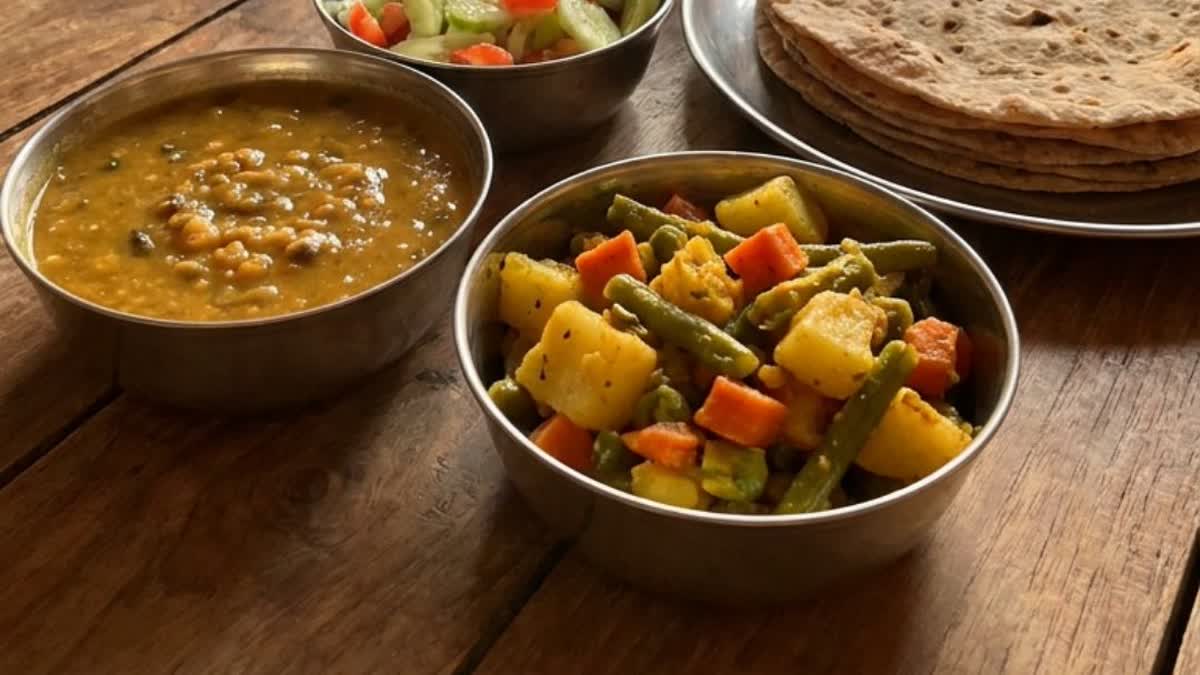
- Food quality: a Mediterranean-style pattern, fewer ultra-processed foods high in sugar and saturated fat, and no sugar-sweetened drinks. Our piece on the Mediterranean diet versus a traditional Indian diet compares the Mediterranean pattern with a traditional Indian diet.
- Alcohol: stop completely and permanently if you have advanced fibrosis or cirrhosis. If you have MASLD without that, ask your doctor what is safe for you.
- Coffee: observational studies link it with less liver damage. That is an association, and the guideline grades the evidence low. It is not a prescription.
Medication exists for the advanced end. The guideline says adults with non-cirrhotic MASH and significant fibrosis (stage 2 or above) should be considered for resmetirom, and that GLP-1 drugs such as semaglutide and tirzepatide are safe to use in MASH and should be used for their usual reasons, diabetes and obesity. Those are decisions for a specialist. Our GLP-1 drug guide covers those drugs in general.
The practical part
Nothing here needs a special product. The evidence points to the boring things: losing a meaningful fraction of your weight if you carry extra, moving most days, eating fewer ultra-processed and sugary foods, and checking your liver if you have the risk factors. If you already know your blood sugar or blood pressure is running high, our pieces on insulin resistance and visceral fat cover the related conditions.
This article is educational and informational. It is not a diagnosis or personalised medical advice. If you have diabetes, obesity, abnormal liver tests, or fat on a scan, ask your doctor which tests and treatment make sense for you, especially before changing medication.
Sources
- Phenome India study, “Burden of MASLD and liver fibrosis,” The Lancet Regional Health – Southeast Asia, 2026. PubMed.
- Bhargava B, et al. Prevalence of metabolic dysfunction-associated fatty liver disease among information technology employees in India. Scientific Reports, 2025. DOI 10.1038/s41598-025-91482-2. PMID 40128210.
- EASL-EASD-EASO Clinical Practice Guidelines on the management of metabolic dysfunction-associated steatotic liver disease (MASLD). Journal of Hepatology, 2024. PubMed.
- National Institute of Diabetes and Digestive and Kidney Diseases (NIDDK). Symptoms and causes of NAFLD and NASH.
To get informed about health issues, visit medimadad.com.
