

By Dr. Ajit Kumar, MD (Medicine) — Founder, Medimadad. About the Author | Editorial Policy
What Does Reversing Type 2 Diabetes Actually Mean?
The scientific term is remission, not reversal. Remission means an HbA1c below 6.5% for at least three months without glucose-lowering medication. The underlying biological vulnerability does not disappear permanently — if old habits return, blood sugar can rise again — but the disease is no longer active and no longer causing daily damage to your blood vessels, kidneys, eyes, and nerves.
- Partial remission: Blood sugar below the diabetic threshold but still above normal
- Full remission: Blood sugar in the completely normal range without any medication
The DiRECT Trial: The Landmark Evidence
The most important study on diabetes remission is the DiRECT trial, published in The Lancet in 2018. Researchers recruited 298 people with type 2 diabetes diagnosed within the past six years and assigned half to an intensive dietary programme: a total diet replacement of 825-853 calories per day for 12 to 20 weeks, followed by structured food reintroduction and long-term maintenance support.
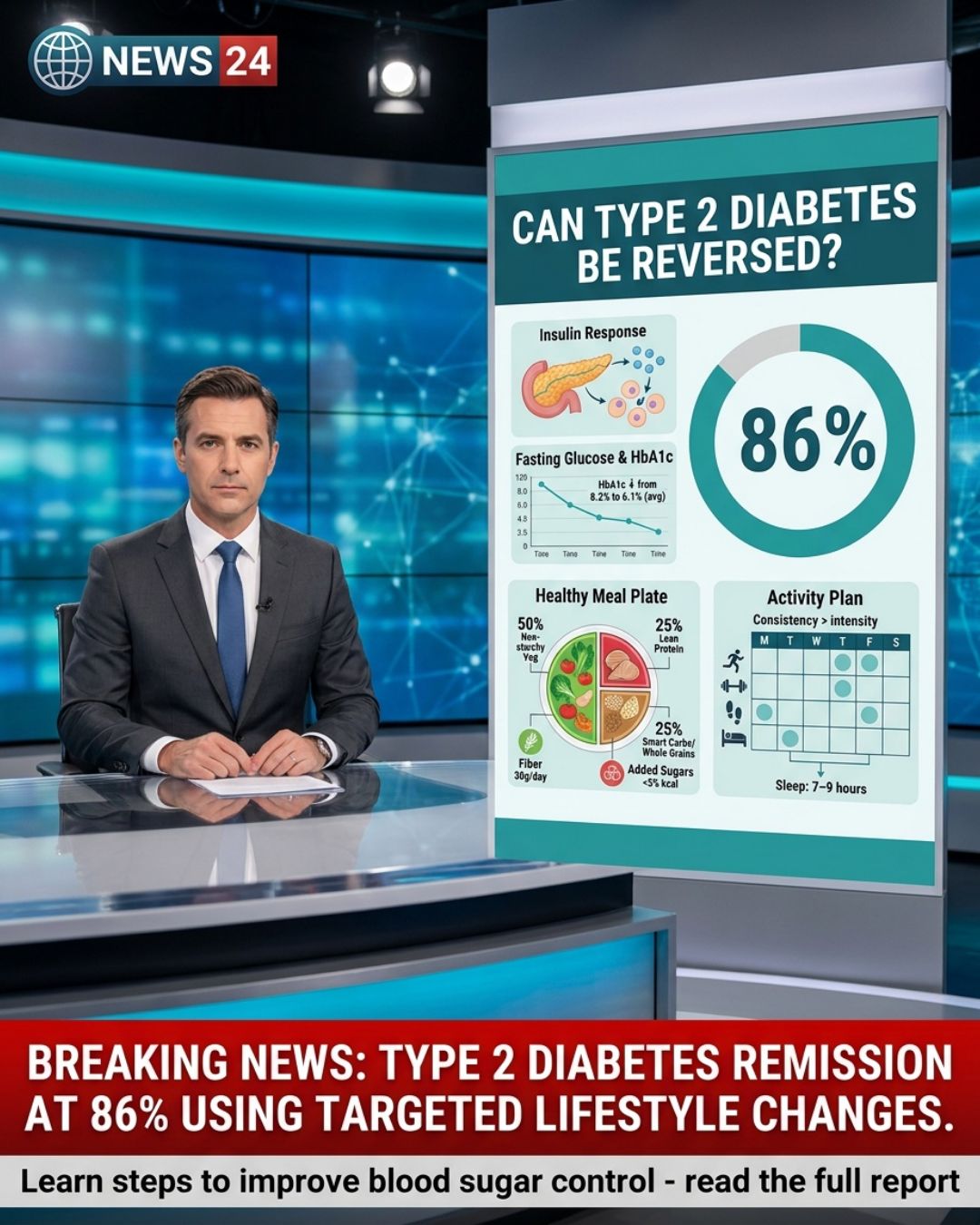
The results were remarkable: 46% achieved remission at 12 months. Among those who lost 15 kg or more, 86% achieved full remission. At 5 years, approximately 24% remained in remission. The key variable was weight loss — the more lost, the higher the remission rate.
The Twin Cycle Hypothesis: Why It Works
Professor Roy Taylor at Newcastle University proposed the Twin Cycle Hypothesis to explain both how type 2 diabetes develops and how it can be reversed. Two reinforcing cycles drive the disease: first, excess calories cause fat to accumulate in the liver, leading to excessive glucose production even while fasting. Second, fat builds up in the pancreas itself, damaging the beta cells that produce insulin. Significant weight loss clears fat from both organs and restores normal function — a prediction confirmed by MRI scans in the DiRECT trial.
Other Pathways to Remission
Low-Carbohydrate Diets
Multiple clinical trials show that low-carbohydrate diets (under 130 g of carbohydrates per day) can bring blood sugar into the normal range rapidly — sometimes within days. A 2019 study in Diabetes Therapy found 60% of participants achieved partial or full remission at one year. The mechanism is direct: fewer carbohydrates means less glucose entering the bloodstream, reducing the demand on an already stressed insulin system while allowing beta cell recovery.
Very-Low-Calorie Diets
Total calorie restriction to 500-800 kcal per day, typically using meal replacement products, has the strongest evidence base for rapid remission. It works faster than low-carb alone but requires close medical supervision, particularly because people on diabetes medication are at risk of hypoglycaemia as blood sugar normalises.
Bariatric Surgery
Gastric bypass and sleeve gastrectomy produce diabetes remission rates of 50-85%, often before significant weight loss occurs — suggesting powerful hormonal mechanisms beyond simple calorie restriction. Surgery is reserved for those with BMI above 35 with poorly controlled diabetes.
Who Is Most Likely to Achieve Remission?
- Duration of diabetes: Less than 6 years significantly increases odds. Long-standing diabetes causes irreversible beta cell loss
- Degree of weight loss: Losing 10-15% of body weight is the threshold where remission becomes likely
- Age: Younger patients have better outcomes, reflecting better residual beta cell function
- Baseline HbA1c: Those below 9% at diagnosis have consistently better remission rates
- Not requiring insulin: Insulin dependence signals significant, long-term beta cell loss
What This Means for Indians Specifically
Indians develop type 2 diabetes at a lower BMI than Western populations — often below 25 kg/m2 — due to a genetic tendency to accumulate visceral and ectopic fat at lower body weights. Research from AIIMS shows that even modest weight loss of 5-8% significantly improves insulin sensitivity in Indians. Traditional foods including moong dal, karela, methi, and fermented foods like idli and dosa are well-suited to low-glycaemic eating patterns. The main challenge is the high consumption of refined carbohydrates: white rice, maida-based breads, and sugar-sweetened beverages.
The Role of Berberine in Supporting Blood Sugar Control
This is an affiliate link – we may earn a commission at no extra cost to you. See our Affiliate Disclosure.
Expert Perspective
“Full remission is achievable regularly — but only for those who treat the lifestyle intervention with the same seriousness as medication. The biology is clear: the pancreas can recover if given the right conditions. For Indian patients particularly, the first five years after diagnosis represent a critical and often underused window of opportunity.”
Important Caveats
- Never stop diabetes medication without medical supervision — blood sugar can spike dangerously
- Remission does not eliminate the underlying predisposition; annual HbA1c monitoring is essential even in remission
- For diabetes of more than 10 years duration, full remission becomes less likely though partial improvement remains valuable
- Weight regain is the primary cause of relapse
Frequently Asked Questions
How long does it take to reverse Type 2 diabetes?
With a very-low-calorie diet, blood sugar can normalise within weeks. Sustained remission is formally assessed at 3 months off glucose-lowering medication.
Can Type 2 diabetes be reversed without medication?
Yes, for recently diagnosed patients. Studies show intensive dietary intervention alone achieves remission in up to 60% of eligible participants. Those on medication should work with their doctor to taper doses safely as blood sugar improves.
Is diabetes reversal permanent?
Remission can last for years with sustained lifestyle maintenance. The DiRECT trial found 24% of participants were still in remission at 5 years. Weight regain is the primary cause of relapse.
Does remission mean I am no longer diabetic?
Technically yes — you no longer meet the diagnostic criteria. But the predisposition remains. Continue annual HbA1c checks and maintain a healthy weight.
Related: Berberine vs Metformin: Which Is Better for Blood Sugar? | Metformin as an Anti-Aging Drug | Complete Guide to GLP-1 Weight Loss Drugs
Further Reading
Get free weekly health insights from Dr. Ajit Kumar
Join thousands of readers. No spam. Unsubscribe anytime.
