

By Dr. Ajit Kumar, MD (Medicine) — Lifetime Member, Indian Medical Association. About the Author | Editorial Policy
Alzheimer’s disease now affects over 50 million people worldwide, with projections showing that number tripling by 2050. In India alone, an estimated 5.3 million people are living with dementia — a figure growing rapidly as the population ages. Against this backdrop, any dietary intervention with meaningful evidence behind it deserves serious attention.
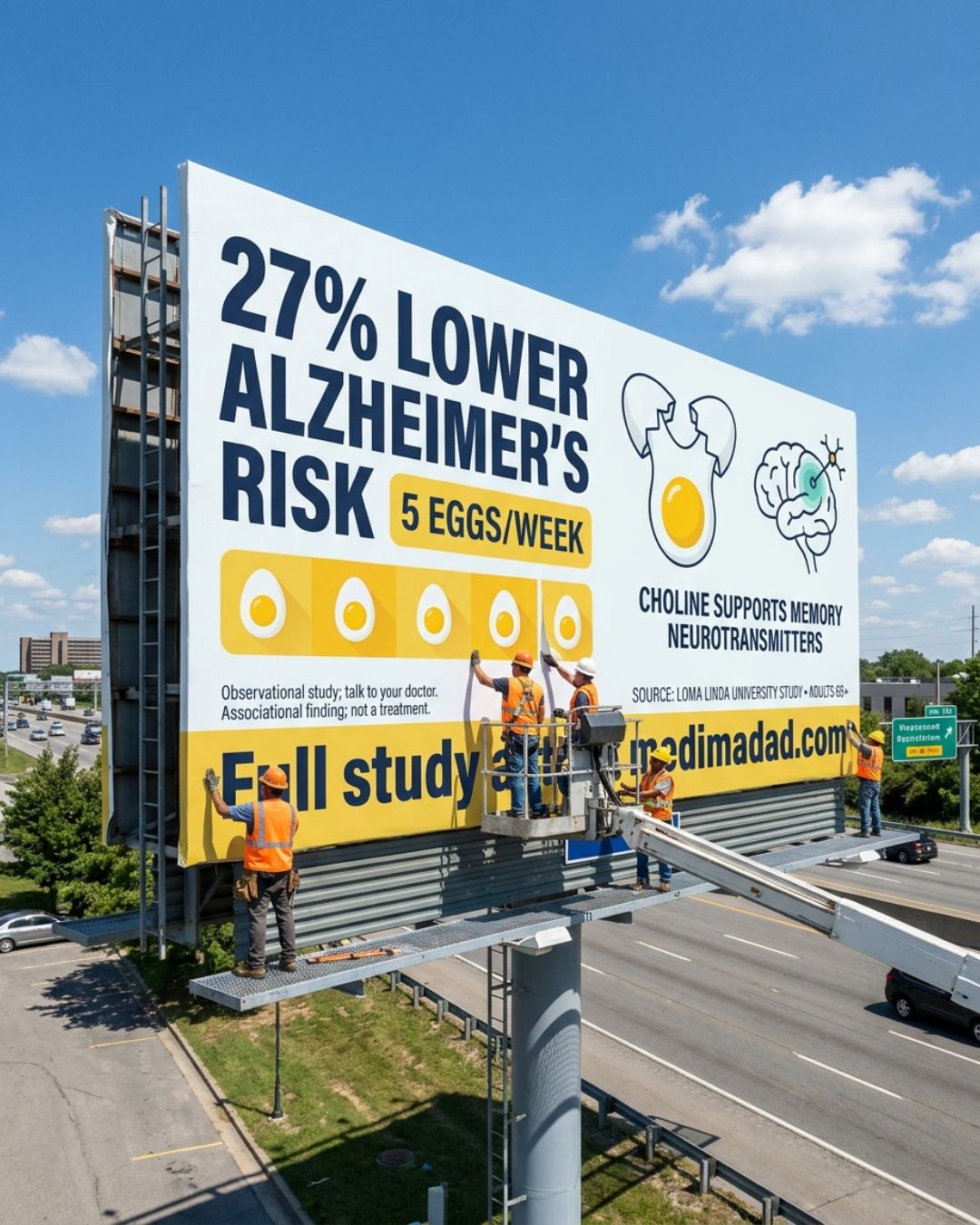
A landmark new study from Loma Linda University suggests that what you eat for breakfast could be quietly protecting your brain. Researchers found that people who ate eggs approximately five times a week had a 27 percent lower risk of developing Alzheimer’s disease compared to those who rarely or never ate them. One egg a day — a simple, affordable habit that may be making a significant difference to brain health in older adults.
What the Study Found
The research tracked thousands of older adults aged 65 and above over an extended period, examining their dietary patterns and long-term cognitive outcomes. Egg eaters — defined as those consuming roughly five eggs per week — consistently showed better protection against cognitive decline than non-egg eaters. The findings were described as a landmark aging study for the scale of its participant base and the clarity of its results.
While researchers note that diet alone cannot guarantee protection against Alzheimer’s, the association between regular egg consumption and reduced risk was strong enough to draw significant attention from the scientific community and has since been corroborated by several secondary analyses.
Why Eggs? The Choline Connection
The likely reason eggs are so protective comes down to one nutrient: choline.
Choline is found in high concentrations in egg yolks and plays a critical role in brain function. The body uses choline to produce acetylcholine — a neurotransmitter essential for memory formation, attention, and cognitive processing. Declining acetylcholine levels are one of the defining features of Alzheimer’s disease.
Most people do not get enough choline from their diet. The daily adequate intake for adults is around 425 to 550 milligrams per day. A single large egg contains roughly 147 milligrams of choline — making eggs one of the richest and most accessible dietary sources available.
Why Eggs Protect the Brain: Key Nutrients
Choline. Used to produce acetylcholine, the neurotransmitter critical for memory and cognitive function. One egg provides about 27 percent of the daily recommended intake.
Omega-3 fatty acids. Found especially in free-range and omega-3-enriched eggs, these fats reduce brain inflammation and support healthy neuron membranes.
Lutein and zeaxanthin. Antioxidants in egg yolks that cross the blood-brain barrier and protect neurons from oxidative stress — a key driver of age-related brain damage.
Vitamin B12. Essential for maintaining the myelin sheath around nerve cells. Deficiency is directly linked to accelerated cognitive decline and memory problems in older adults.
What About Cholesterol?
The most common concern people raise about eating eggs regularly is cholesterol. For decades, dietary guidelines warned against too many eggs due to their cholesterol content. That position has shifted substantially.
Current research suggests that for most healthy adults, dietary cholesterol from eggs has minimal impact on blood cholesterol levels. Multiple large prospective studies have found no significant association between egg consumption of up to one per day and cardiovascular events in healthy adults. People with specific conditions such as diabetes or familial hypercholesterolaemia should consult their doctor, but for the general population, daily egg consumption is considered safe by most current evidence.
Choline Deficiency: How Common Is It?
Choline deficiency is far more widespread than most people realise. Analysis of nutrition survey data found that over 90 percent of adults do not meet the daily adequate intake for choline. In India, where egg consumption is lower and plant-based diets are more common, deficiency rates are likely similar or higher.
The groups most at risk are pregnant women — who need choline for foetal brain development — older adults whose dietary variety often narrows with age, and strict vegetarians who avoid eggs entirely. The brain consequences of chronic choline deficiency manifest gradually as subtle memory slippage, slower processing, and reduced focus — changes most people attribute to normal aging rather than a correctable nutritional gap.
The Omega-3 Advantage for Brain Health
Beyond choline, maintaining adequate omega-3 fatty acid intake is one of the most powerful things you can do for brain health. Omega-3s — particularly DHA — are a primary structural component of brain cell membranes. Low DHA levels are consistently associated with faster cognitive decline and higher dementia risk.
While eggs contain some omega-3s, levels vary by hen-raising conditions. Free-range and omega-3-enriched eggs contain higher amounts. For a deeper look at omega-3 deficiency and brain health in Indian adults, see our dedicated article on omega-3 deficiency in India.
Support Your Brain Health Daily
Alongside eggs, a quality Omega-3 Fish Oil supplement supports brain cell health, reduces neuroinflammation, and maintains the DHA levels your brain needs as you age. Check current price on Amazon.
Not sure how much you need? Use our Omega-3 Intake Calculator for a personalized daily target.
This is an affiliate link – we may earn a commission at no extra cost to you. See our Affiliate Disclosure.
The MIND Diet: A Broader Brain Protection Framework
The Loma Linda egg study sits within a larger body of research on dietary patterns and dementia risk. The MIND diet — a hybrid of the Mediterranean and DASH diets specifically designed for brain protection — has shown in clinical trials that strict adherence reduces Alzheimer’s risk by up to 53 percent, with even moderate adherence producing a 35 percent reduction.
The MIND diet recommends ten brain-healthy food groups: leafy green vegetables, other vegetables, nuts, berries, beans, whole grains, fish, poultry, olive oil, and wine (in moderation). Eggs are not explicitly listed but their choline, lutein, and B12 content aligns with the MIND diet’s nutritional goals. Building a diet that includes eggs alongside leafy greens, berries, fatty fish, nuts, and olive oil gives you the broadest nutritional coverage for long-term brain protection. For a comprehensive roadmap, see our complete guide on the 8 most proven dementia prevention strategies.
Combining Brain-Protective Nutrients for Maximum Benefit
No single nutrient works in isolation. The most robust brain protection comes from combining multiple evidence-backed compounds. Eggs provide choline, lutein, and B12. Fatty fish or fish oil supplements provide DHA and EPA. Creatine monohydrate supports brain energy metabolism and provides neuroprotection under stress. Leafy greens provide folate and vitamin K. Together, these form a nutritional foundation addressing brain health from multiple angles simultaneously.
Research suggests the synergy between choline and omega-3 fatty acids is particularly strong — both are needed for healthy cell membrane structure in neurons, and each improves the absorption and function of the other. For more on how creatine fits into brain health, read our full guide on creatine as the most underrated brain supplement.
A Word of Caution
While the study findings are genuinely exciting, Alzheimer’s is a complex, multifactorial disease — no single food can guarantee protection. Genetics, cardiovascular health, sleep quality, exercise habits, stress management, and social connection all play significant roles alongside diet. Regular cognitive check-ups after the age of 60 remain important regardless of how healthy your diet is.
Dr. Ajit Kumar’s clinical perspective
“This finding is worth taking seriously precisely because it’s unglamorous — nobody is selling anything by telling people to eat an egg a day. Choline deficiency genuinely doesn’t come up often enough in routine dietary counselling, and in a country where a meaningful share of the population eats vegetarian or minimizes eggs for other reasons, it’s worth actively asking about rather than assuming intake is adequate. This shouldn’t be framed as a guarantee against Alzheimer’s for any individual — the effect size in observational nutrition research always deserves some skepticism — but as a low-cost, low-risk addition to a broader brain-health strategy, it’s hard to argue against.”
— Dr. Ajit Kumar, MD Medicine | Healthcare Consultant and Health Educator, Founder of Medimadad
Practical Takeaway
Aim for five eggs per week — roughly one per day on weekdays. Opt for free-range or omega-3-enriched varieties when possible. Do not skip the yolk — that is where the choline, lutein, and omega-3s are concentrated. Pair that habit with adequate omega-3 intake, regular physical activity, quality sleep, and mentally stimulating activities.
Frequently Asked Questions
How many eggs a week is safe for brain health?
The Loma Linda University study found the strongest protective association at approximately five eggs per week. Current cardiovascular guidelines consider up to seven eggs per week safe for most healthy adults. One egg daily is well within safe limits and offers meaningful choline, lutein, and B12 benefits for brain health.
Does eating only egg whites still protect against Alzheimer’s?
No. The brain-protective nutrients in eggs — choline, lutein, zeaxanthin, omega-3 fatty acids, and vitamin D — are concentrated almost entirely in the yolk. Egg whites contain protein but virtually none of these brain-protective compounds. Discarding the yolk removes the primary brain-protective benefit of egg consumption.
Are free-range eggs better for brain health than regular eggs?
Yes, for omega-3 content specifically. Pasture-raised or omega-3-enriched eggs have significantly higher DHA and EPA than conventionally raised eggs. Choline, lutein, and B12 levels are similar across all egg types. If brain health is your primary motivation, omega-3-enriched eggs offer additional benefit, though all eggs provide meaningful choline.
Can vegetarians protect against Alzheimer’s without eating eggs?
Vegetarians who avoid eggs should prioritise choline intake through soy products, kidney beans, and quinoa. Choline supplements such as alpha-GPC or citicoline are a practical option. For omega-3s, algae-based DHA supplements provide the same brain-building fatty acid found in fish without animal-derived ingredients.
For a complete science-backed brain protection routine, visit medimadad.com — we cover the latest research on nutrition, exercise, sleep, and supplementation for healthy aging.
Get free weekly health insights from Dr. Ajit Kumar
Join thousands of readers. No spam. Unsubscribe anytime.
