

By Dr. Ajit Kumar, MD (Medicine) — Founder, Medimadad. About the Author | Editorial Policy
A landmark scientific discovery is reshaping how researchers think about human aging. For the first time, scientists have successfully transferred a longevity gene from one species to another – and the results have exceeded all expectations. The naked mole rat longevity breakthrough could mark the beginning of a new era in aging science.
The Animal That Defies Aging
The naked mole rat is one of the most unusual animals on Earth. Despite being roughly the size of a mouse, it lives up to 37 years – ten times longer than any comparable rodent. It almost never develops cancer. It shows virtually no signs of biological aging even in the final years of its life. And it remains fertile and cognitively sharp well into old age.
Scientists have spent decades trying to understand exactly why this animal breaks every rule of mammalian aging. The answer, it turns out, has been hiding inside its genes.
The HAS2 Gene – Nature’s Anti-Aging Switch
The key discovery centers on a gene called HAS2, which produces high-molecular-weight hyaluronic acid (HMW-HA) in unusually large quantities inside the naked mole rat’s body. This compound creates a dense, protective environment around cells – reducing inflammation, preventing tumors from forming, and slowing the cellular deterioration that drives aging.
Naked mole rats produce far more HMW-HA than mice or humans. The question was: could that protective effect be transferred to another species?
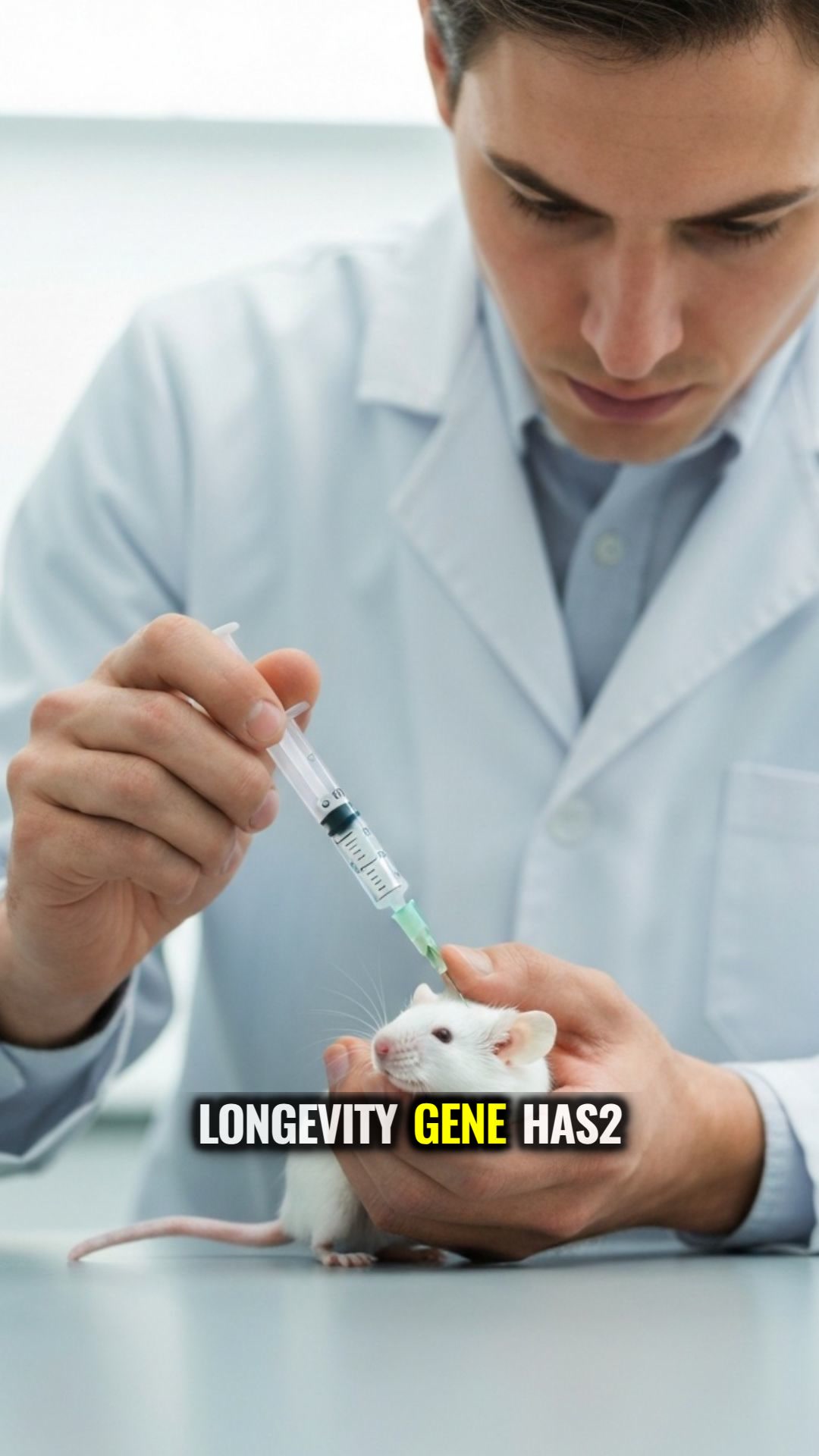
The 2023 study, published in Nature by Vera Gorbunova, Andrei Seluanov, and colleagues at the University of Rochester, confirmed the gene transfer directly: researchers inserted the naked mole rat HAS2 gene into the genome of ordinary mice using a precision genetic technique. The results were striking. The genetically modified mice showed a 4.4% extension in median lifespan and a 12.2% extension in maximum lifespan compared to controls – both statistically significant. Cancer incidence in old age dropped by 34% in the modified mice, and they showed less age-related physical decline on standard frailty scoring, alongside measurably lower systemic inflammation. It was the first documented, reproducible case of a longevity gene being transferred from one species to another with measurable results in the recipient.
What This Means for Human Aging
Humans already produce hyaluronic acid – it plays a role in skin hydration and joint lubrication. But we produce far less HMW-HA than naked mole rats, and our production declines sharply with age. The research raises a compelling question: could increasing HMW-HA levels in humans produce similar protective effects?
Researchers caution that human gene therapy is still many years away from clinical application. But the conceptual foundation is now firmly established – longevity mechanisms are transferable across mammalian species. That changes the landscape of aging research entirely.
The NMN Connection – Supporting Your Longevity Today
While the naked mole rat gene therapy remains in the research phase, there are cellular longevity pathways that can be supported today. One of the most studied is the NAD+ pathway – the same energy and repair system that declines with age in all mammals, including humans.
NMN (nicotinamide mononucleotide) is a direct precursor to NAD+, the molecule that powers cellular energy production and DNA repair. As NAD+ levels drop with age, cells become less efficient at repairing damage – which accelerates the aging process at a cellular level. NMN supplementation has been shown in multiple studies to raise NAD+ levels and support healthy cellular function.
Recommended: NMN Supplement for Cellular Longevity
If you want to support your NAD+ levels and cellular health, I recommend a high-quality NMN supplement. It is one of the most evidence-backed interventions for supporting the same cellular energy and repair pathways that researchers are now targeting through the naked mole rat longevity gene.
This is an affiliate link – we may earn a commission at no extra cost to you. See our Affiliate Disclosure.
The Bigger Picture: A New Era of Longevity Science
The naked mole rat HAS2 study is one piece of a rapidly accelerating puzzle. Combined with advances in senolytics, caloric restriction mimetics, and NAD+ precursors like NMN, scientists are converging on a multi-pathway approach to slowing human aging.
The fact that a single longevity gene transferred from a mole rat to a mouse extended lifespan and reduced cancer proves something profound: aging is not simply inevitable – it is, at least partly, programmable.
For a full breakdown of what this research means and how to apply today’s best longevity science to your own health, visit medimadad.com – where we cover every major development in health science as it happens.
Dr. Ajit Kumar’s clinical perspective
“Findings like this matter less for what they promise about human gene therapy – which is genuinely many years away – and more for what they prove about the biology of aging itself: a single gene, moved between species, measurably changed both lifespan and cancer risk in a living mammal. That is a very different kind of evidence from a supplement study or an observational cohort, and it deserves to be talked about with a different level of confidence. The honest answer to what this means today is that nothing changes clinically yet, but the NAD+ pathway this research touches on is one of the few longevity mechanisms with reasonably solid, if still early, human safety data behind supplementation. That distinction matters more than walking away thinking a mouse gene-therapy result is something to act on this year.”
– Dr. Ajit Kumar, MD Medicine | Healthcare Consultant and Health Educator, Founder of Medimadad
Further Reading
- → What Is Biological Age and How Do You Actually Measure It?
- → Does Intermittent Fasting Actually Extend Lifespan? What the Science Really Says
- → Rapamycin and Longevity: The Most Exciting Anti-Aging Drug Science Has Found
- → Is Metformin the Anti-Aging Drug of the Future? What the Science Says
- → Walking vs Running for Longevity: Which One Actually Extends Your Life?
Get free weekly health insights from Dr. Ajit Kumar
Join thousands of readers. No spam. Unsubscribe anytime.
