
By Dr. Ajit Kumar, MD (Medicine) — Founder, Medimadad. About the Author | Editorial Policy
Every year, thousands of people die from heart attacks and sudden cardiac events with no prior warning. No chest pain, no breathlessness, no diagnosed heart disease – just a structurally compromised heart that no one knew about. The challenge has always been that the most dangerous forms of structural heart disease are silent until they are not.
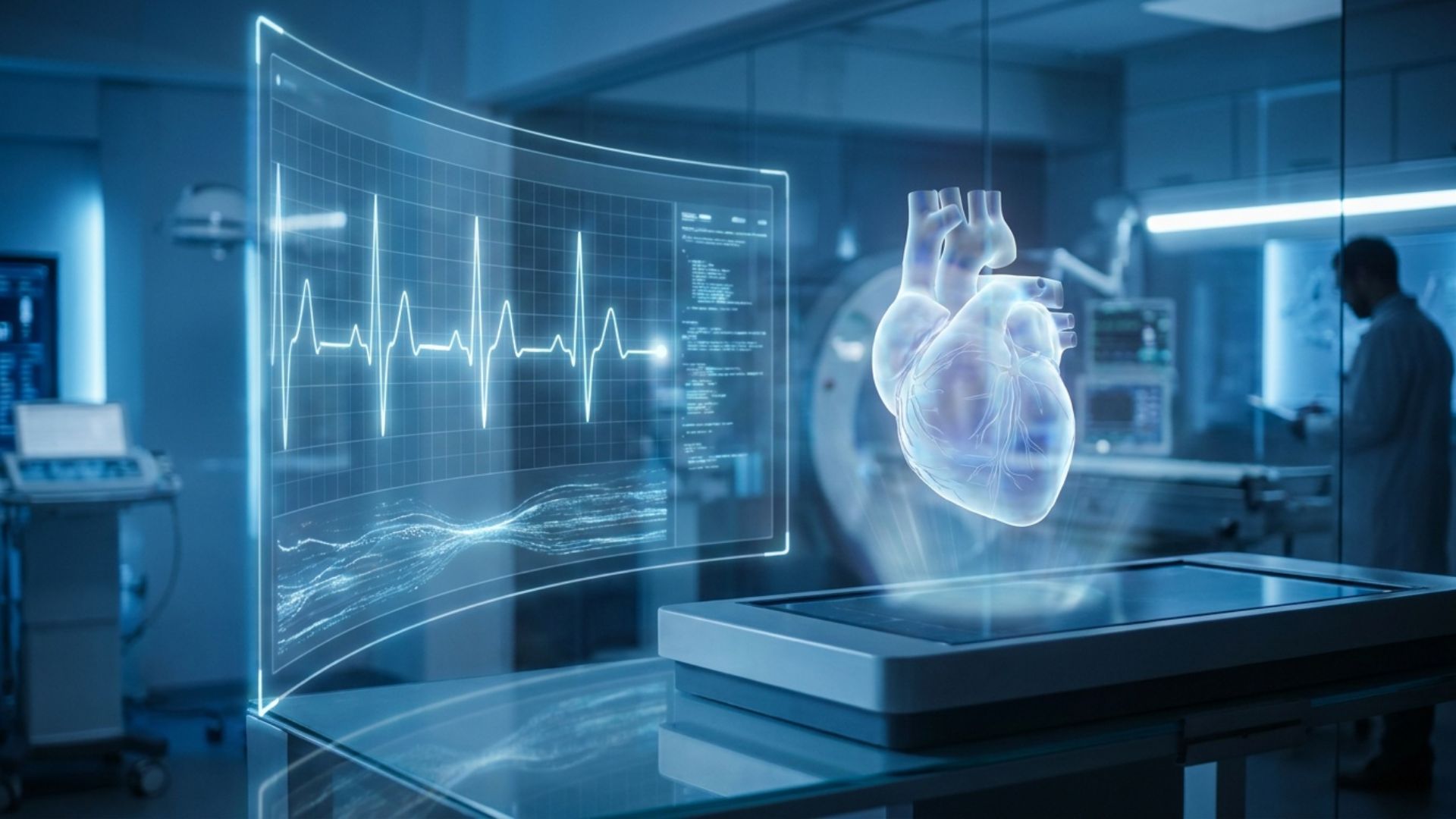
The United States Food and Drug Administration (FDA) cleared a new AI tool called EchoNext on 22 June 2026 for six indications, including detecting signs of structural cardiovascular disease from a routine ECG – before symptoms appear. This is a significant development in preventive cardiology, and it has direct implications for how we approach heart health screening globally, including in India.
What the FDA Cleared – and Why It Matters
The AI tool analyses cardiac data – electrocardiograms (ECGs) and related diagnostic outputs – to identify patterns that indicate underlying structural heart disease. These patterns are often invisible to the human eye on a routine ECG reading, but the AI system has been trained on hundreds of thousands of cardiac records to recognise the subtle signatures of conditions like left ventricular dysfunction, hypertrophic cardiomyopathy, and aortic stenosis.
The critical point: these conditions can be present and dangerous for years before causing symptoms. By the time most people experience shortness of breath, chest pain, or heart failure symptoms, significant cardiac damage has already occurred.
FDA clearance – under the 510(k) pathway for medical devices – means the tool has demonstrated safety and efficacy equivalent to existing cleared technologies. It can now be deployed in clinical settings in the US, and similar regulatory approval processes are expected to follow in other countries.
How the AI Reads Your Heart Before You Feel Anything
A standard 12-lead ECG is a 10-second electrical snapshot of your heart. A trained cardiologist reads it for obvious abnormalities – arrhythmias, ST-segment changes, bundle branch blocks. But the AI system does something fundamentally different: it analyses subtle amplitude, morphology, and timing patterns across all 12 leads simultaneously, detecting signal variations that are statistically associated with underlying structural disease.
What AI Cardiac Screening Can Detect
Left ventricular dysfunction. The left ventricle is the heart’s main pumping chamber. AI can identify reduced ejection fraction – a measure of how much blood the heart pumps – from ECG patterns alone, with accuracy comparable to echocardiography in high-risk populations.
Hypertrophic cardiomyopathy (HCM). A genetic thickening of the heart muscle that is the most common cause of sudden cardiac death in young athletes. HCM is often completely asymptomatic until a fatal arrhythmia occurs. AI detection enables intervention before this happens.
Aortic stenosis. Narrowing of the aortic valve that progressively restricts blood flow from the heart. It develops silently over years and is frequently diagnosed only after heart failure symptoms appear. AI can flag early structural changes warranting further investigation.
Atrial fibrillation risk. The AI can identify electrical patterns that predict future AF – the most common cardiac arrhythmia and a leading cause of stroke – even in patients currently in normal sinus rhythm.
The Accuracy Numbers – What Studies Have Shown
AI-ECG tools of this class have been validated in large-scale trials. Research published in peer-reviewed cardiology journals – including studies from the Mayo Clinic and Stanford – has demonstrated that AI-ECG analysis can detect low ejection fraction with sensitivity above 85% and specificity above 90%. For hypertrophic cardiomyopathy, sensitivity exceeds 87% – performance levels that approach or match echocardiography for screening purposes.
Crucially, these tools work on standard equipment already present in every hospital and clinic. No new machines required – just a software layer that reads the ECG output the doctor was already ordering.
Why This Matters Specifically for India
India has the highest absolute burden of cardiovascular disease in the world. Approximately 28% of all deaths in India are now attributable to cardiovascular disease – and Indian populations develop heart disease an average of 10 years earlier than Western populations, with more aggressive disease progression.
Despite this, India faces a severe shortage of cardiologists – approximately 1 cardiologist per 100,000 people in urban areas, with far worse ratios in rural regions. Echocardiography, the gold standard for structural cardiac assessment, is expensive, requires trained operators, and is not available in most primary care settings.
An AI tool that can screen for structural heart disease from a standard ECG – a test available at virtually every clinic in India – has transformative potential. Early identification means earlier intervention, which in cardiac disease is the difference between a manageable condition and a fatal event.
AI in Preventive Cardiology – The Broader Trend
This FDA clearance is not an isolated event. It is part of an accelerating wave of AI integration in cardiovascular medicine:
AI-powered ECG analysis is already deployed at scale in the Mayo Clinic health system across the United States, where it has identified tens of thousands of previously undiagnosed patients with low ejection fraction. Follow-up treatment – heart failure medications, device therapy – has demonstrably improved outcomes in this cohort.
In radiology, AI tools are now routinely analysing CT coronary angiograms and cardiac MRI to quantify plaque burden and predict 5-year cardiac event risk with greater accuracy than traditional risk calculators.
The direction is clear: cardiovascular disease will increasingly be caught earlier, in asymptomatic patients, through AI-augmented routine investigations.
What You Should Do With This Information
If you are over 40, have risk factors (hypertension, diabetes, family history of heart disease, obesity, smoking), or have never had a cardiac assessment, ask your physician for a 12-lead ECG at your next visit. It is inexpensive, quick, and non-invasive. As AI analysis tools become integrated into clinical workflows globally – including India – that ECG may soon provide information it never could before.
In parallel, the fundamentals of cardiovascular risk reduction remain unchanged. Omega-3 fatty acids have among the strongest evidence bases in preventive cardiology – multiple large-scale trials confirm they reduce triglycerides, lower inflammatory markers, and reduce the risk of cardiovascular events in high-risk individuals.
Recommended: Neuherbs Deep Sea Omega-3 2500mg
High-potency omega-3 with EPA and DHA at clinically effective doses. Shown to reduce triglycerides, lower inflammatory markers, and support cardiovascular health. One of the most important daily supplements for heart disease prevention.
This is an affiliate link – we may earn a commission at no extra cost to you. See our Affiliate Disclosure.
The Horizon: AI-First Cardiac Care
The FDA clearance of this AI cardiovascular screening tool is a milestone in medicine’s transition to AI-augmented preventive care. The promise is not just earlier diagnosis – it is the democratisation of specialist-level cardiac assessment, making it available to patients in resource-limited settings through the tools already in their doctor’s hands.
For a country like India, where cardiovascular disease strikes earlier, harder, and with less specialist support than almost anywhere in the world, this technology cannot come fast enough.
Dr. Ajit Kumar is a physician with an MD in Medicine. He writes on AI in healthcare and medical technology at Medimadad AI360 Health. This article is for informational purposes only and does not constitute medical advice.
Get free weekly health insights from Dr. Ajit Kumar
Join thousands of readers. No spam. Unsubscribe anytime.
