

By Dr. Ajit Kumar, MD (Medicine) — Founder, Medimadad. About the Author | Editorial Policy
If you’ve started noticing more hair in the shower drain or on your pillow a few months into Ozempic, here’s what’s actually going on and what you can do about it — not just the science, but the practical version I’d walk you through in an appointment.
First: is this actually from the drug?
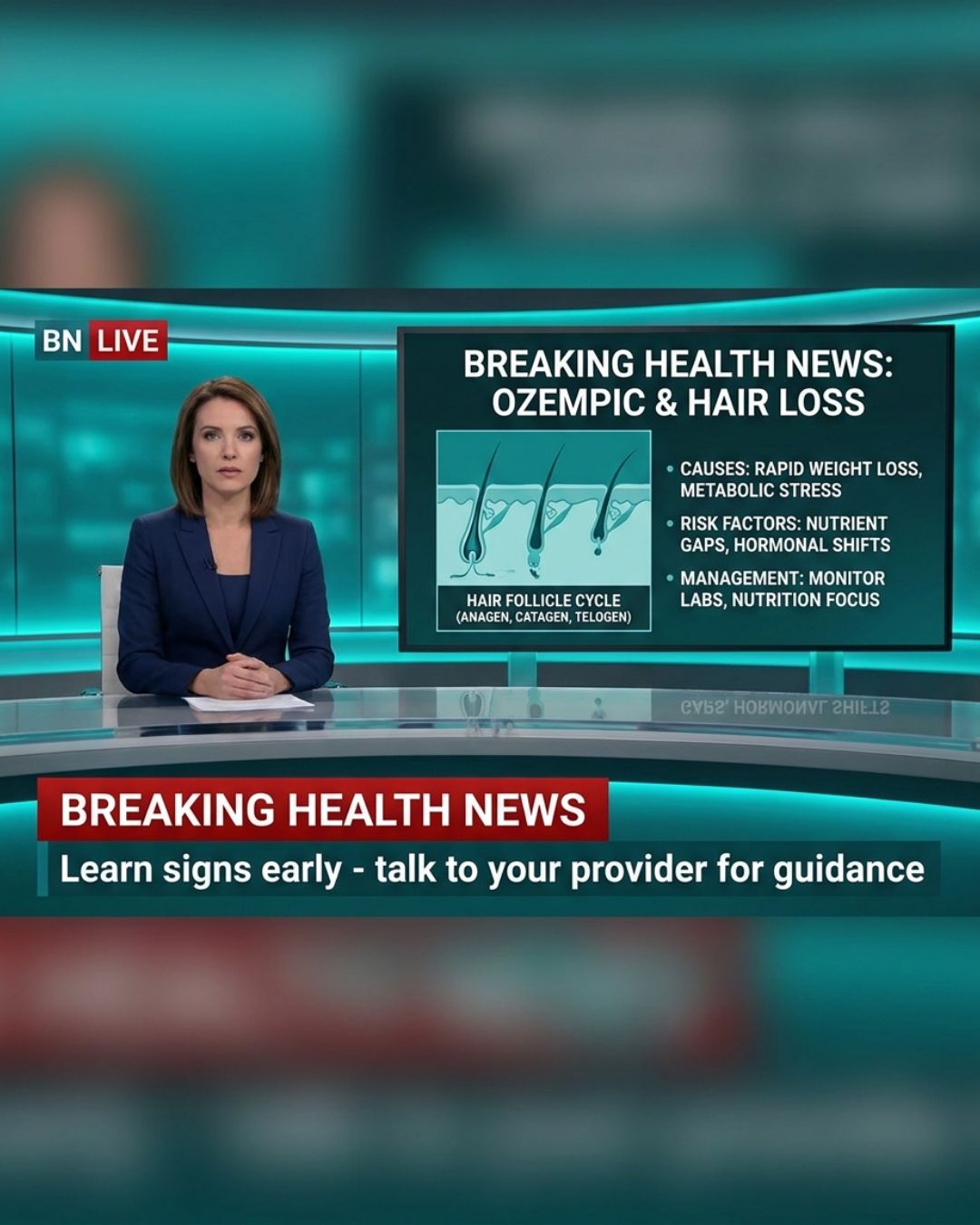
Almost certainly not directly. What you’re experiencing has a name — telogen effluvium — and it’s not a side effect of semaglutide acting on your hair follicles. It’s your body’s reaction to rapid weight loss itself. Hair follicles cycle through growth, transition, and resting phases, and physical stress — rapid weight loss, major illness, surgery, sharp caloric restriction — can push a large number of follicles into the resting phase all at once. That shows up as diffuse shedding across your whole scalp, usually starting 2-4 months after the stress began. Because Ozempic produces some of the fastest weight loss available outside surgery, it’s also one of the more likely triggers of this — not through any drug toxicity, but through the sheer speed of the metabolic change.
It affects an estimated 3-5% of people on GLP-1 medications — real, but a minority. If you’re one of them, here’s what actually matters.
Will it grow back?
For the large majority of people, yes — fully. Once the weight loss stabilizes, follicles return to their normal cycle, and regrowth typically starts within 3-6 months, with full density restored within a year. The one exception: if you have an underlying genetic predisposition to pattern hair loss (concentrated at the crown or temples rather than spread evenly across the scalp), GLP-1 therapy can unmask or accelerate that separately, and that needs its own treatment conversation with a dermatologist rather than just waiting it out.
What actually helps — in the order I’d prioritize them
Protein, above everything else. Hair is almost entirely keratin, a protein. Aim for 1.2-1.6 g of protein per kg of body weight daily — this is the single most evidence-backed thing you can do, and it also protects the muscle mass GLP-1 therapy tends to reduce alongside fat. Paneer, dal, eggs, chicken, Greek yoghurt — build every meal around one of these rather than treating protein as an afterthought.
Slow down if you can. Talk to your doctor about whether your dose titration schedule has room to produce more gradual weight loss. Losing 0.5-0.75 kg a week puts far less physiological stress on your system than 1.5-2 kg a week, and the difference in hair-shedding risk is meaningful.
Get your levels checked. Ask for ferritin, iron, zinc, vitamin D, and B12 before starting GLP-1 therapy and periodically during it. Ferritin below 70 ng/mL is linked to hair loss even without full-blown anemia, and it’s easy to miss if nobody’s specifically looking for it.
Consider topical minoxidil. 2% for women, 5% for men, available over the counter in India. It extends the active growth phase of the follicle and is the best-evidenced topical option for speeding up regrowth from telogen effluvium specifically.
“Hair loss on Ozempic is almost always telogen effluvium from rapid weight loss — not a drug toxicity. I counsel my patients before starting GLP-1 therapy to aggressively protect their protein intake. Those who hit their protein targets consistently rarely report significant shedding. The ones who come back distressed about hair loss have almost always been under-eating protein while losing weight rapidly.”
When to see someone instead of just waiting it out
- If the shedding is concentrated at your crown or temples rather than spread evenly — see a dermatologist, this may be pattern hair loss rather than telogen effluvium
- Get a TSH test if the shedding is sudden and severe — thyroid dysfunction is a separate, common cause worth ruling out
- Don’t stop Ozempic over hair loss alone without talking to your doctor first — for most people the metabolic benefits substantially outweigh a temporary, reversible cosmetic effect
The bottom line
Hair loss on Ozempic is real for a minority of users, almost always temporary, and almost always about the speed of weight loss rather than the drug itself. Protein intake is the single biggest lever you actually control. If you’re worried, that’s a reasonable thing to bring up at your next appointment rather than something to just push through alone.
Further Reading
Get free weekly health insights from Dr. Ajit Kumar
Join thousands of readers. No spam. Unsubscribe anytime.
