

By Dr. Ajit Kumar, MD (Medicine) — Founder, Medimadad. About the Author | Editorial Policy
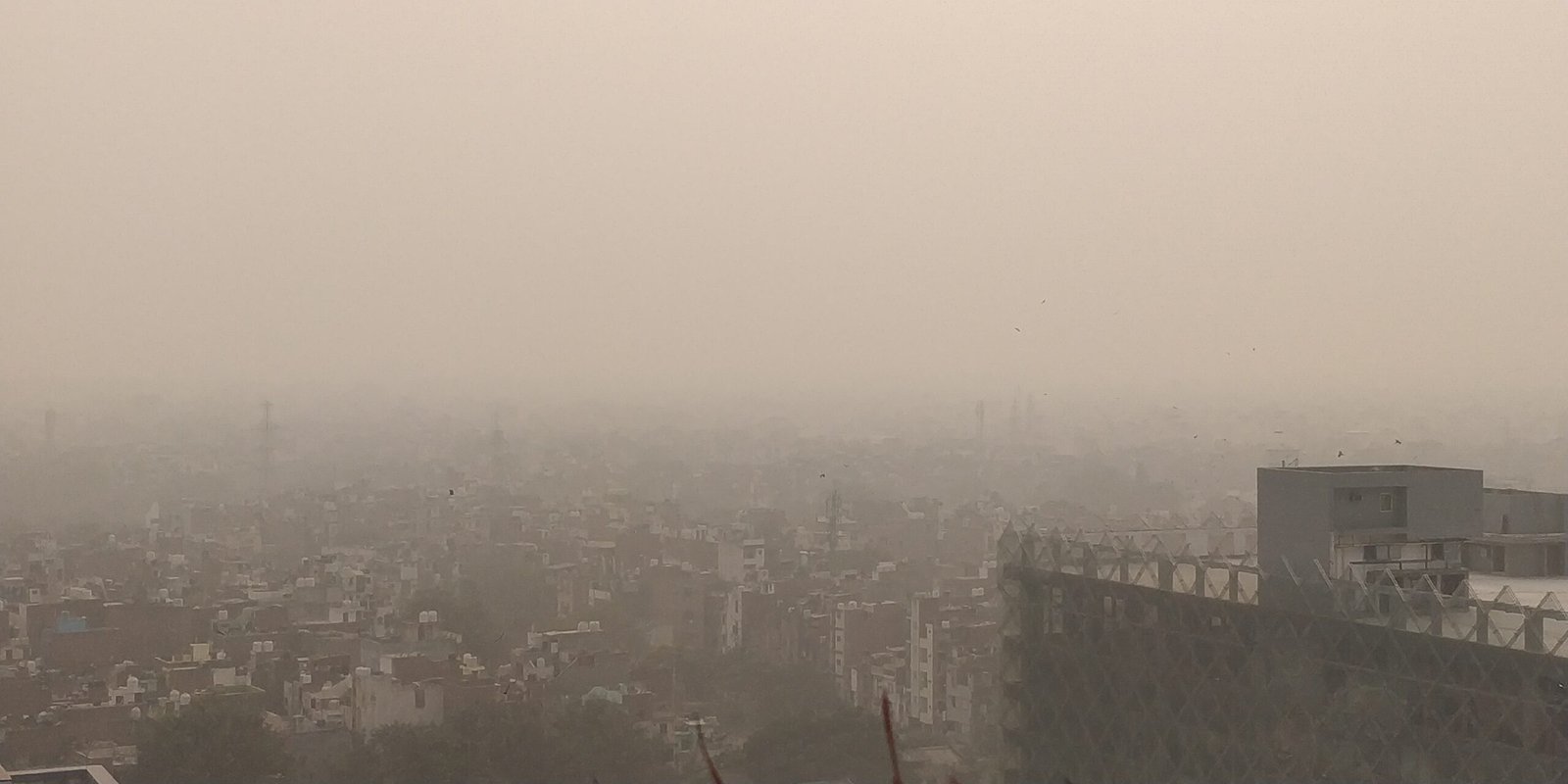
India’s anemia problem is usually explained the same way: not enough iron in the diet, heavy menstrual blood loss, pregnancy demands. All true, and all well documented. But a peer-reviewed study published in October 2025, in the journal Environmental Research: Health, points to something that almost never comes up in that conversation — the air itself.
The study, led by researchers at IIT Delhi (Khushboo, Chaudhary, Ghosh, Singh, Knibbs, West, Kumar, Imam and Dey), looked at air quality data from 2007 to 2016 alongside health records from India’s fourth National Family Health Survey (NFHS-4, 2015-16), covering women of reproductive age (15-49). Over that decade, the country’s Air Quality Index rose by 22% — from an average of 122 in 2007 to 149 in 2016. The researchers wanted to know whether that rise tracked with anemia rates, independent of the usual dietary and reproductive explanations.
What the Study Actually Found
It did. For every 10-point increase in AQI, the odds of a woman being anemic went up by a factor of 1.061 (95% confidence interval: 1.058-1.063) — a small but statistically precise effect, repeated across a large national dataset. Hemoglobin levels moved in the matching direction: each 10-point AQI increase was linked to a drop of 0.038 g/dL. That’s a modest shift per unit of pollution, but AQI in large parts of India didn’t move by just one unit over this period — it moved by dozens.
Worth being exact about what this kind of study can and can’t tell you. It’s a cross-sectional, logistic-regression analysis — strong at showing that two things are statistically linked across a huge sample, but not built to prove, on its own, that pollution directly causes anemia in any one woman. The researchers controlled for several known confounders (wealth, iron intake, BMI, education, where someone lives, cooking fuel), which strengthens the finding, but an association study is still an association study, not a clinical trial.
Why Would Dirty Air Cause Anemia?
The study’s own introduction points to chronic systemic inflammation as the likely bridge between the two. Long-term exposure to fine particulate matter (PM2.5) has been linked to persistent low-grade inflammation in the body — and the authors describe this kind of inflammation as the second leading cause of anemia worldwide, right behind plain dietary iron deficiency. Inflammation can interfere with how the body stores and uses the iron it already has, even when intake itself hasn’t changed.
One detail the authors flag specifically: it wasn’t only particulate matter doing the damage. Gaseous pollutants showed an association with anemia too, at a scale the researchers say is comparable to PM — which is why their own conclusion is that clean-air efforts aimed only at particulate matter may be missing half the picture.
What This Means If You Live in a High-Pollution City
This isn’t a reason to stop paying attention to diet or to skip an iron-deficiency workup if you’re feeling the usual symptoms — fatigue, pale skin, shortness of breath on exertion. Those causes are still the dominant ones, and they’re the ones an actual blood test and a doctor can act on directly.
What it does add is a genuinely new variable to a problem India already treats as urgent: if you live somewhere with consistently high AQI, that alone may be quietly working against your iron levels, on top of whatever your diet is doing. For now, the practical takeaway is the boring-but-real kind — reducing personal exposure where you reasonably can (tracking local AQI, using indoor air filtration on the worst days, avoiding outdoor exertion during pollution spikes) sits alongside the standard dietary and medical steps, not instead of them.
Frequently Asked Questions
Does this study prove that air pollution causes anemia?
Not on its own. It’s a large, carefully controlled observational study showing a statistically significant association — not a clinical trial establishing direct cause and effect in individuals. The size and consistency of the finding make it a serious lead, not a proven mechanism.
Should I get tested for anemia if I live in a polluted city?
If you have symptoms like persistent fatigue, pale skin, dizziness or shortness of breath, a simple hemoglobin blood test is the right next step regardless of where you live — talk to a doctor rather than self-diagnosing from this article.
Is this only about particulate matter (PM2.5)?
No — the study specifically found that gaseous pollutants were associated with anemia at a level comparable to particulate matter, which the authors say means air-quality efforts need to look beyond PM alone.
This article is for general health information and does not replace personal medical advice. If you have symptoms of anemia, consult a qualified doctor for diagnosis and treatment.