
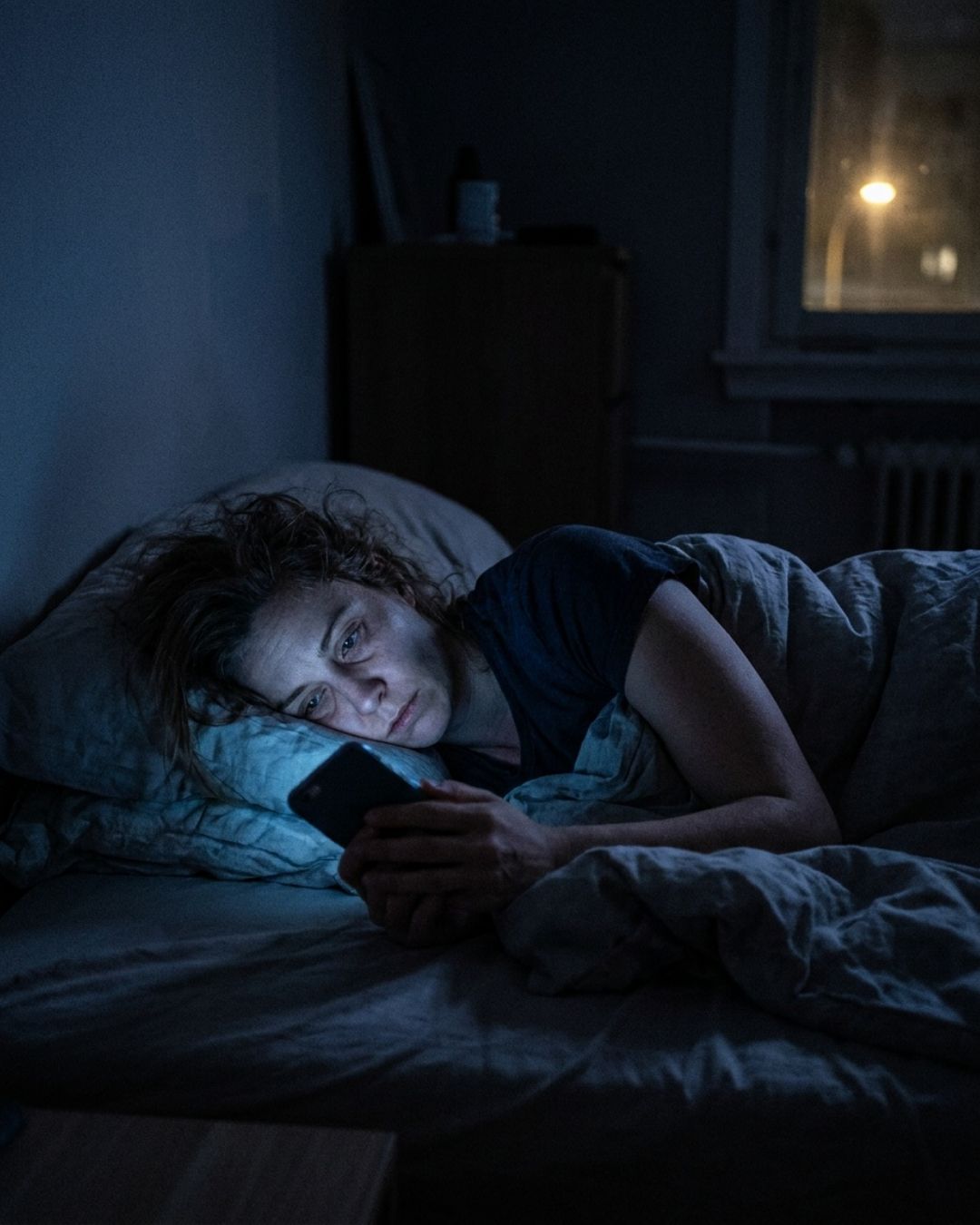

It’s 11:47 PM. You have a 7 AM alarm. You are exhausted. And you are still scrolling — not because anything on the screen is particularly good, but because the moment you put the phone down and close your eyes, the day is officially over, and it never really felt like it was yours to begin with.
This pattern has a name now: revenge bedtime procrastination. It isn’t insomnia, and it isn’t a diagnosable sleep disorder. It’s a behaviour — delaying sleep on purpose, despite knowing the cost, to claw back a sense of control over a day that felt like it belonged to everyone else. And in India specifically, the numbers behind it are larger than most people assume.
Where the Term Comes From
The phrase was coined around 2020 by journalist Daphne K. Lee, who translated it from a Chinese expression describing workers with long, rigid working hours who refused to sleep early in order to reclaim some personal freedom at night. It caught on globally because it named something a lot of people were already doing without a word for it — and it has stayed in circulation since, not as a passing meme but as a recurring subject in sleep-medicine and behavioural-health writing through 2025 and into 2026.
The Real Numbers: What India’s Own Data Shows
Most coverage of revenge bedtime procrastination treats it as a global, mostly Western phenomenon. The Indian data tells a sharper story.
- A psychology department survey at Saurashtra University, covering 1,350 participants, found that 65% showed varying degrees of revenge bedtime procrastination.
- Deccan Herald, reporting on the broader sleep-health picture, cites that 61% of Indians describe themselves as poor sleepers, explicitly naming this behaviour as one of the contributing patterns — not the only cause of poor sleep in India, but a real and measurable one.
- A 2026 observational study published via PMC examined bedtime procrastination, sleep patterns, and subjective wellbeing specifically within an Indian population — evidence that this isn’t an imported concern being retrofitted onto Indian readers, but an active area of domestic research.
Two-thirds and three-fifths are not fringe numbers. If these figures hold up across the wider population, revenge bedtime procrastination is closer to a norm than an exception among Indian adults juggling long work hours, commutes, and — increasingly — a blurred line between “at work” and “at home” that remote and hybrid work has only made worse.
Why We Do This: The Psychology, Not the Willpower Story
The instinctive explanation is “poor discipline” or “phone addiction.” That framing misses what’s actually going on, and it’s part of why generic “just put your phone down” advice fails so consistently.
Revenge bedtime procrastination is, at its core, an autonomy-seeking behaviour. When most of a person’s waking hours are allocated to someone else — an employer, a commute, family obligations, caregiving — the only hours left that feel genuinely self-directed are the ones right before sleep. Delaying bedtime becomes a way of saying “this time is mine,” even when the person doing it knows, in the moment, that they’ll regret it in the morning.
This is also why decision fatigue plays a role. By late evening, the same self-control resources that helped someone stick to a diet, sit through a difficult meeting, or manage a stressful commute have been spent. Choosing to close the laptop and go to sleep is, itself, one more decision requiring willpower — and it’s often the one decision made after the tank is already empty.
Not a Sleep Disorder — But Not Harmless
It’s worth being precise here, because overclaiming in either direction does readers a disservice. Revenge bedtime procrastination is not insomnia (the person isn’t struggling to fall asleep — they’re actively choosing to delay trying), and it isn’t classified as a clinical sleep disorder. Sleep physicians are generally careful to keep that distinction clear, and so should any responsible coverage of the topic.
That said, the downstream effect on the body doesn’t care what the behaviour is called. Chronic sleep restriction — even when self-imposed and voluntary — is well established in the sleep-medicine literature to affect next-day attention and working memory, mood regulation, glucose and insulin sensitivity, and immune function. The mechanism doesn’t distinguish between “I couldn’t sleep” and “I chose not to sleep yet” — the sleep debt accumulates either way.
Who’s Most Affected in India
The pattern shows up most consistently among:
- Young professionals in high-hour-count industries — IT, consulting, BPO/night-shift-adjacent roles — where the workday routinely eats into what should be personal time.
- Remote and hybrid workers, for whom the physical boundary between “office” and “home” has disappeared, along with much of the psychological one.
- Parents and caregivers, particularly those managing both a job and a household, for whom the only unclaimed hours in the day are genuinely the ones after everyone else is asleep.
- Long-commute city dwellers, where two to three hours a day can vanish into transit before the workday even starts or ends.
Evidence-Based Ways to Reclaim Time Without Losing Sleep
The fix is not “have more discipline.” The fix is giving the underlying need — a sense of control over some part of the day — somewhere to go that doesn’t cost sleep.
- Move “me time” earlier, deliberately. Even 20-30 minutes of protected, guilt-free personal time in the early evening — before the wind-down window starts — reduces the psychological pressure to claim it at midnight instead.
- Set a hard technology cutoff, not a vague intention. “I’ll stop soon” rarely works because it competes with an activity designed to be difficult to stop (short-form video, in particular, is built around exactly this). A specific time, paired with physically moving the phone out of arm’s reach, works better than willpower alone.
- Audit what the “me time” activity is actually giving you. Passive scrolling and genuinely restorative leisure are not the same thing, even though they can feel similar in the moment. Reading, a hobby, a short walk, or even ten minutes of doing nothing at all tends to leave people feeling more replenished than an hour of algorithm-fed content — worth testing honestly for yourself rather than assuming more screen time equals more rest.
- Negotiate boundaries where the actual time loss is happening. If work messages routinely arrive after hours, or a commute is eating three hours a day, the sustainable fix addresses that directly rather than trying to out-discipline a structural problem at 11 PM.
- Build in a wind-down buffer, not just a bedtime. A fixed lights-out time without a preceding buffer just moves the same struggle ten minutes earlier. A 20-30 minute low-stimulation routine before that time makes the transition to sleep genuinely easier, not just earlier on paper.
“Revenge bedtime procrastination isn’t a willpower failure — it’s usually a sign that someone’s daytime hours genuinely don’t feel like their own. Telling people to simply sleep more without addressing that underlying imbalance rarely works for long. The more durable fix is protecting a real slice of unclaimed time earlier in the day, so the body isn’t being asked to trade sleep for autonomy at midnight.”
– Dr. Ajit Kumar, MD Medicine | Healthcare Consultant and Health Educator, Founder of Medimadad
Frequently Asked Questions
Is revenge bedtime procrastination the same as insomnia?
No. Insomnia is difficulty falling or staying asleep despite wanting to. Revenge bedtime procrastination is delaying the attempt to sleep in the first place, on purpose, even while tired.
Is it a real medical condition?
It isn’t a clinically diagnosed sleep disorder — it’s a behavioural pattern. That doesn’t make its effects on sleep debt any less real; it just means the fix is behavioural and structural, not medical treatment.
Why do I keep doing it even though I know I’ll regret it the next morning?
Because in the moment, the trade being made isn’t “sleep versus scrolling” — it’s “sleep versus the only unclaimed time I have.” Addressing the second problem directly tends to work better than relying on willpower alone against the first.
Does this only affect people who work night shifts or long hours?
No — while long-hour and high-pressure jobs make it more likely, the underlying driver (a day that feels entirely claimed by other people’s demands) can affect students, parents, and caregivers just as much.
Explore the Wider Medimadad Ecosystem
This article lives under Medimadad’s Sleep Medicine coverage, but sleep and stress rarely stay in one lane. If evidence-based health content interests you, Medimadad’s main site also covers general medicine, AI in healthcare, and the financial side of long-term health, all in the same evidence-first way. For deeper psychology and human-behaviour coverage specifically, Medimadad Mind & Meanings goes further into that territory. And if what you actually need right now is less reading and more winding down, Medimadad Sleep & Mind (our sister channel) makes long-form relaxation and ambient content built for exactly that.
Further Reading on Medimadad
- Wrong Sleep Duration Is Aging Your Brain, Heart and Lungs Faster — The Exact Safe Zone
- The Real Reason You Wake Up Tired Even After 8 Hours of Sleep
- Sleep Apnea and Weight Loss: Does Losing Weight Actually Fix Sleep Apnea?
- How Accurate Are Sleep Tracking Apps? A Doctor’s Honest Assessment
- Do Sleep Trackers Actually Work? An Honest Review of the Science
